




Dr Anup Ramani @ Copyright 2024
By Dr. Anup Ramani
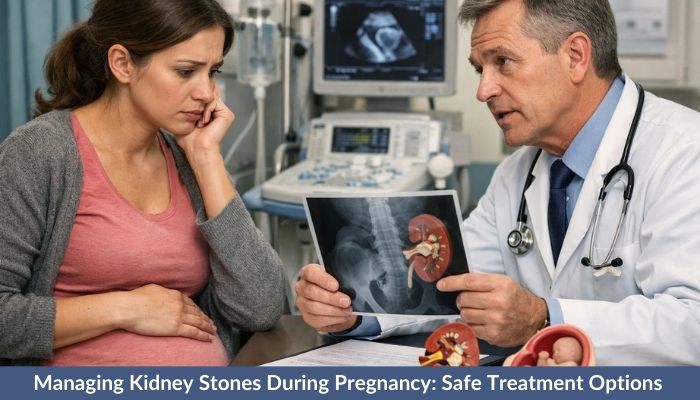
Kidney stones are a common medical condition that can cause severe pain and discomfort. Pregnancy, on the other hand, brings its own set of challenges for both the mother and the baby. The presence of kidney stones during pregnancy can complicate the situation further, as it may require special consideration when deciding on treatment options. The approach to kidney stone removal during pregnancy needs to be carefully assessed to ensure both maternal and fetal safety. This article will explore the safe methods for kidney stone removal during pregnancy, the risks involved and the procedures that are generally avoided.
Kidney Stone Removal Surgery During Pregnancy: When Is It Necessary?
Kidney stones are hard deposits of minerals and salts that form in the kidneys. When a stone moves into the urinary tract, it can obstruct the flow of urine, leading to sharp pain, discomfort and other symptoms. While kidney stones are typically treated through conservative methods, such as drinking fluids and taking pain medications, the treatment approach during pregnancy requires extra care.
Kidney stone removal surgery is typically not the first line of treatment in pregnancy, as it carries inherent risks. However, in certain circumstances, surgical intervention may become necessary. If the kidney stone causes significant obstruction, infection or persistent pain, surgery for kidney stones may be required to protect both the mother and the baby. The surgical procedure for kidney stones during pregnancy, especially in the second or third trimesters, should be approached with caution and only when non-invasive treatments fail or the situation is deemed critical.
Surgical Removal of Kidney Stones During Pregnancy: The Challenges
Pregnancy causes changes in the urinary tract and kidney function. The kidneys increase in size and urine flow becomes more sluggish due to hormonal changes. As a result, women who are pregnant are at a higher risk of developing kidney stones. If kidney stones become large enough or cause an obstruction, they can lead to complications such as urinary tract infections, severe pain or kidney damage.
The main challenge in performing kidney stone removal surgery during pregnancy lies in the safety of the surgical procedure. During pregnancy, anesthesia can have adverse effects on the fetus, especially in the first trimester. Additionally, radiation exposure, which is common in some kidney stone removal techniques, can pose risks to fetal development. Therefore, when considering surgery for kidney stones in pregnant patients, doctors must weigh the benefits and risks to both the mother and child.
Surgery for Kidney Stones: When to Consider It
A key consideration in choosing whether or not to proceed with surgery for kidney stones is the size and location of the stones. Small stones that can pass naturally through the urinary tract may not require surgery. Instead, conservative management, including hydration, pain relief and medication, can be effective. However, larger stones or those causing significant discomfort, blockages or infections may require more invasive treatment.
One of the safer methods for kidney stone removal during pregnancy is using a minimal invasive procedure such as ureteroscopy or percutaneous nephrolithotomy (PCNL). These techniques involve small incisions and can be done without extensive anesthesia, reducing risks for both the mother and baby. However, these procedures should only be performed after careful consultation with an experienced urologist to ensure safety.
What Our Patients Are Saying
Procedure to Remove Kidney Stones: Techniques and Approaches
There are several surgical approaches that may be considered for kidney stone removal during pregnancy. The procedure chosen will depend on the size, location and composition of the stone, as well as the trimester of pregnancy. Here’s an overview of some of the common techniques:
- Ureteroscopy (URS):
Ureteroscopy is a procedure often used to treat kidney stones, particularly for stones located in the ureter or kidney. This procedure involves the use of a thin tube with a camera to remove or break up the stone. In pregnancy, URS Surgery is generally considered safe, especially in the second and third trimesters, as it does not require radiation. The URS Procedure in India is typically performed under spinal anesthesia and no external cuts are required. It is done by inserting an endoscope through the urethra into the kidney to remove or break down the stone using a laser. - Percutaneous Nephrolithotomy (PCNL):
PCNL involves a small incision in the back to directly access the kidney and remove stones. This procedure is typically reserved for larger stones that cannot be treated with less invasive methods. While effective, PCNL requires general anesthesia, which can pose risks to the fetus, particularly in the first trimester. This approach is more invasive compared to ureteroscopy and it carries a longer recovery time.
Kidney Stone Laser Removal Surgery: A Safer Option?
Kidney stone laser removal surgery is an advanced and minimal invasive option for kidney stone removal. This technique uses a laser to break up kidney stones into smaller pieces that can be easily passed through the urinary tract. In pregnancy, laser surgery can be considered if less invasive methods such as ureteroscopy are ineffective. This procedure is often recommended for stones located in the lower urinary tract and is especially useful in the second and third trimesters.
While laser surgery offers significant advantages in terms of recovery time and minimal risk, it still requires careful consideration due to the use of anesthesia and the potential for complications. Laser removal surgery is typically avoided during the first trimester due to the heightened risks of fetal harm.
Kidney Stone Surgical Treatment: Recovery and Post-Operative Care
After undergoing kidney stone removal surgery during pregnancy, it is important for patients to follow strict post-operative care instructions. Recovery times can vary depending on the surgical method used and the overall health of the mother. It is crucial to monitor for any signs of infection or complications, such as fever or increased pain.
During the recovery period, women are advised to rest and hydrate to prevent the formation of new stones. Follow-up appointments with the urologist are essential to ensure proper healing and to monitor kidney function. Additionally, patients should avoid any activities that may increase the risk of further injury or complications.
What to Avoid When It Comes to Kidney Stone Removal in Pregnancy
There are several treatment options that are generally avoided during pregnancy due to potential risks. Similarly, open surgery, which requires a large incision and prolonged recovery time, is typically avoided unless absolutely necessary.
Certain medications used to manage kidney stones, are also avoided during pregnancy due to potential risks to the fetus. Doctors may prescribe safer alternatives, to manage pain.
In some cases, kidney stones that are not causing severe symptoms may be monitored and treated conservatively without immediate surgery. Pregnant women with kidney stones are often advised to increase their fluid intake, adjust their diet and avoid foods that may promote stone formation, such as high-oxalate foods.
Why Choose Expert Care for Kidney Stone Treatment during Pregnancy
Choosing the right healthcare provider is crucial when dealing with kidney stone removal during pregnancy. Dr. Anup Ramani is a pioneer in robotic urology and internationally recognized for his expertise in robotic surgery for urological conditions. With over two decades of global experience, his team specializes in advanced robotic surgery for prostate cancer, kidney disease and bladder cancer, offering some of the most cutting-edge treatments available. They provide tailored treatment plans for kidney stone management, utilizing procedures like URS/RIRS. These procedures ensure both safety and effectiveness, with the latest laser treatment, ensuring optimal outcomes for both mother and baby.
Conclusion
Kidney stone removal during pregnancy is a delicate matter that requires careful planning and consideration. While surgery for kidney stones is generally avoided unless necessary, there are safe and effective options available. Procedures such as URS for kidney stone removal surgery can offer relief without significant risks to the fetus. By working with experienced healthcare professionals and making informed decisions, pregnant women can manage kidney stones safely while ensuring the well-being of both mother and baby.
FAQs
Is kidney stone removal safe during pregnancy?
Yes, certain minimal invasive procedures like ureteroscopy and laser surgery are safe during pregnancy with proper medical guidance.
What are the risks of surgery for kidney stones in pregnancy?
Surgical procedures carry risks such as anesthesia complications and potential harm from radiation, especially in the first trimester.
Can kidney stones pass naturally during pregnancy?
In many cases, small stones may pass naturally with hydration and pain management, avoiding the need for surgery.
What are the symptoms of kidney stones during pregnancy?
Symptoms may include severe back or abdominal pain, blood in urine and difficulty urinating.
When should surgery for kidney stones be considered during pregnancy?
Surgery is typically considered when stones cause severe pain, infection or blockage that cannot be managed conservatively.
About Author

Uro-Oncological & Robotic Surgeon
Dr. Anup Ramani is a robotic uro-oncological surgeon and an internationally recognized expert in robotic surgery for prostate, kidney and urinary bladder cancers. With more than two decades of robotic experience and 2,000+ robotic procedures, he brings unmatched precision and outcomes to complex uro-oncology cases. He is widely published in his field and is known for a personal, transparent approach-often spending over an hour in initial consultations to educate patients on its disease, surgery and recovery. His expertise spans prostate cancer treatment, kidney and bladder cancer surgery, adrenal gland surgery, kidney stone treatment, penile cancer surgery and enlarged prostate management. Dr. Ramani advocates the advantages of robotic surgery-magnified 3D vision, tremor-filtered precision, minimal scarring, lower blood loss and faster recovery-helping patients return to life sooner.
Table of Contents

Recent Blogs
Best Uro-Oncological surgeon
Specialist in India for Robotic Surgery
MCh, DNB, MS, DNB
Dr. Anup Ramani
CONTACT
Uro-Oncologist in India,
Best Robotic Surgeon for Uro Oncology Surgery
1407, One Lodha Place Next to World Towers Senapati Bapat Marg, Worli, Mumbai. 400013.
Dr Anup Ramani @ Copyright 2024 – Website Maintenance, SEO & GEO by Opal Infotech
- Partial penectomy is done in cases where glans and distal penis is involved with carcinoma.
- Partial penectomy is a type of organ-preserving surgery. Preservation of sexual and micturational function depends on the surgical dissection and reconstruction of residual urethra.
- Patients who develop stones in the kidney or ureter, often experience severe pain.
- This condition usually needs a procedure to remove the kidney stones.
- This procedure is called ureteroscopy and is performed very commonly.
- It does not require any cuts and hence it is painless.
- The procedure is performed with an endoscope inserted through the penis under spinal anesthesia.
- The scope is inserted through the penis into the kidney and stones are dissolved with a laser.
- The procedure takes about 40-50 minutes.
- A catheter (urine pipe) is kept after the procedure to drain the bladder. A stent is kept in the kidney at the same time.
- Patient is mobile and walking in the room the same evening.
- Hospital stay is one night and patient is discharged the next day after removal of the catheter.
- Patient has to come back after six weeks to remove the stent in the kidney.
- Patients can resume office a week after surgery and heavy activities like running, weight lifting, a month after the procedure.
- We offer fixed packages for this procedure which can be obtained by calling our helpline +91 9967666060.
- Men with an enlarged prostate, which is a normal ageing changes, often experiencing difficulty passing urine. This condition usually needs a procedure to trim the prostate and relieve the blockage.
- This procedure is called TURP and is performed very commonly.
- It does not require any cuts and hence it is painless.
- The procedure is performed with an endoscope inserted through the penis under spinal anaesthesia.
- The overgrown prostate is dissolved with a laser bloodlessly.
- The procedure takes about 40 minutes.
- A catheter (urine pipe) is kept after the procedure to drain the bladder.
- Patient is mobile and walking in the room the same evening.
- Hospital stay is two nights and patient is discharged with the catheter, which is removed after 4 days.
- Patients can resume office a week after surgery and heavy activities like running, weight lifting, a month after the procedure.
- We offer fixed packages for this procedure which can be obtained by calling our helpline +91 9967666060.
-
Robotic adrenalectomy is a sophisticated, complex surgery and it is very important that an experienced surgeon performs this surgery to avoid major complications.
-
Once the anesthesia is done, and patient positioned, three micro cuts (3mm each) are made in the patient’s abdomen.
-
The arms of the Da Vinci robot are connected to the cuts via ports (tubes).
-
Dr. Ramani then sits in the controlling console to perform the surgery.
-
On an average, a robotic adrenalectomy takes one hour.
-
The surgery is almost completely bloodless and there has never been any need to transfuse blood after surgery.
-
A urine catheter and bag to drain the bladder is inserted during surgery.
-
A tiny drain pipe may be inserted in the surgical side of the abdomen, connected to a bag.
-
Patient is kept nil-by-mouth the day of the surgery, with IV fluids. Sips of water are started the next day and solid food by day three.
-
The drain pipe, if kept, is removed in the room on day 2 after surgery.
-
The catheter is removed on day two after surgery.
-
Total hospital stay for robotic adrenalectomy is 4 nights (including night before surgery).
-
Post discharge, a doctor from the surgical team visits the patient at home/ hotel room once every day.
On the day of discharge, patient is totally self-sufficient. They are able to walk freely without any pain, dress themselves, shower, toilet and they do not need to hire any nurse or help at home. Almost all patients are back to work within 2 weeks of surgery.
Heavy activities like running, weight lifting can be resumed after a month
Follow up after an adrenalectomy is in the form of CT scans, once a year for 5 years.
Local patients usually meet Dr. Ramani after two weeks to discuss report.Outstation patients are counselled on a phone consultation.
- Dr. Ramani is one of the very few surgeons in India who has the expertise to perform a robotic surgery for bladder cancer, which includes removing the urinary bladder and reconstructing a new bladder robotically.
- Robotic radical cystectomy is an extremely sophisticated, complex surgery and it is very important that an experienced surgeon performs this surgery to avoid major complications.
- Once the anaesthesia is done, and patient positioned, six micro cuts (3mm each) are made in the patient’s abdomen.
- The arms of the Da Vinci robot are connected to the cuts via ports (tubes).
- Dr. Ramani then sits in the controlling console to perform the surgery.
- On an average, a robotic radical cystectomy with an ileal conduit takes 3-4 hours.
- The surgery is almost completely bloodless and there has never been any need to transfuse blood after surgery.
- A urine catheter and bag to drain the new bladder is inserted during surgery.
- Two tiny drain pipe in inserted in the surgical side of the abdomen, connected to a bag.
- Patient is kept nil-by-mouth for 4 days after surgery with IV supplementation of patient’s daily requirements of calories, fats, carbohydrates, proteins and electrolytes.
- The drain pipes are removed in the room on day 3-5 after surgery.
- Total hospital stay for radical cystectomy is 8 nights (including night before surgery).
- Post discharge, a doctor from the surgical team visits the patient at home/ hotel room once every day.
- On the day of discharge, patient is totally self-sufficient. They are able to walk freely without any pain, dress themselves, shower, toilet and they do not need to hire any nurse or help at home.
- Almost all patients are back to work within 6 weeks of surgery. Heavy activities like running, weight lifting can be resumed after two months.
Follow up after a radical a cystectomy is in the form of CT scans, once a year for 5 years.
Histopathology report: Local patients usually meet Dr. Ramani after two weeks to discuss report.
Outstation patients are counselled on a phone consult. Depending on the report, patient may or may not need chemotherapy after surgery.
If chemo is needed, patients may choose to get it done with a medical oncologist of their choice or avail the services of one of the four medical oncologists on our team.
- Robotic partial nephrectomy is a sophisticated, complex surgery and it is very important that an experienced surgeon performs this surgery to avoid major complications. Robotic radical (total) nephrectomy is
- relatively easier but still requires significant experience to consistently deliver results.
- Once the anaesthesia is done, and patient positioned, five micro cuts (3mm each) are made in the patient’s abdomen.
- The arms of the Da Vinci robot are connected to the cuts via ports (tubes).
- Dr. Ramani then sits in the controlling console to perform the surgery.
- On an average, a robotic radical nephrectomy takes one hour and a robotic partial nephrectomy takes about an hour and half.
- The surgery is almost completely bloodless and there has never been any need to transfuse blood after surgery.
- A urine catheter and bag to drain the bladder is inserted during surgery.
- A tiny drain pipe in inserted in the surgical side of the abdomen, connected to a bag.
- Patient is kept nil-by-mouth the day of the surgery, with IV fluids. Sips of water are started the next day and solid food by day three.
- The drain pipe is removed in the room on day 3 after surgery. The catheter is removed on day two after surgery.
- Total hospital stay for radical/partial nephrectomy is 4 nights (including night before surgery).
- Post discharge, a doctor from the surgical team visits the patient at home/ hotel room once every day.
- On the day of discharge, patient is totally self- sufficient.
- They are able to walk freely without any pain, dress themselves, shower, toilet and they do not need to hire any nurse or help at home.
- Almost all patients are back to work within 2-3 weeks of surgery.
- Heavy activities like running, weight lifting can be resumed after a month.
- Follow up after a radical/partial Nephrectomy is in the form of CT scans, once a year for 5 years.
- Local patients usually meet Dr. Ramani after two weeks to discuss report.
- Outstation patients are counselled on a phone consultation.