




By Dr. Anup Ramani
Share At:
Google AI ChatGPT Grok Perplexity

Listening Article

AI Summary

Recovery after bladder removal surgery is a gradual process involving hospital healing, adapting to a new way of passing urine, and attending regular follow up visits. How quickly a patient recovers depends on the type of urinary diversion chosen, cancer stage, overall health, and kidney function. With clear medical guidance and family support, most patients adjust to life after bladder removal and return to normal activities over time.

Introduction

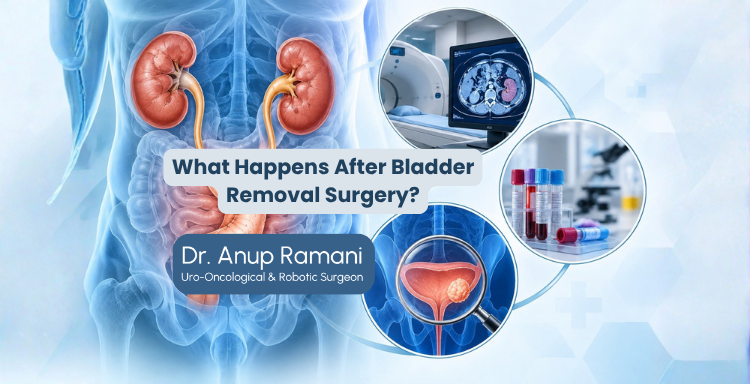
Recovery after bladder removal surgery depends on the type of urinary diversion used, the cancer stage, and how the body heals. Bladder removal surgery, or radical cystectomy, is a major operation removing the bladder, most often because of bladder cancer that has grown into the bladder wall or carries a high risk of spreading.

No two patients recover the same way. Age, general health, kidney function, and the diversion type all shape the pace of healing, and realistic expectations make the journey easier to manage.


What Is Bladder Removal Surgery?

Radical cystectomy is the surgical removal of the entire bladder, and sometimes nearby lymph nodes, to treat bladder cancer. It is generally considered when cancer has invaded the bladder muscle wall or has not responded to other treatments, including muscle invasive, high risk, or recurrent bladder cancer, or cancer that has spread nearby.

Before recommending surgery, doctors evaluate cancer stage, tumour location, overall health, kidney function, and the patient’s treatment goals, which guide both the surgical approach and the urinary diversion method chosen.

What Happens Immediately After Bladder Removal Surgery?

The first days focus on stabilising the body and beginning healing. Patients typically remain in hospital for one to two weeks, depending on the surgical approach and individual response.

During this period, the medical team focuses on:

  • Pain management and close monitoring of vital signs
  • Caring for the incision and any drains or tubes
  • Encouraging early, gentle movement to reduce complications
  • Gradually reintroducing fluids and food as bowel function returns

Following post surgery instructions closely supports a smoother recovery.

How Is Urine Passed After Bladder Removal Surgery?

Once the bladder is removed, the body needs a new way to pass urine through urinary diversion after bladder removal, selected based on cancer condition, kidney function, and overall health.

Ileal Conduit

An ileal conduit uses a short segment of small bowel to create a channel that carries urine to a stoma on the abdomen, where it collects in an external bag. Daily care involves emptying and changing the bag and keeping the surrounding skin healthy.

Neobladder Reconstruction

A neobladder is a new, internal reservoir created from intestine and connected to the urethra, allowing many patients to pass urine without an external bag. Patients learn to recognise when it is full and train pelvic muscles for emptying, with full control sometimes taking several months.

Other Urinary Diversion Options

Other techniques may suit specific situations, with the final choice personalised based on cancer extent, kidney function, and patient preference.

What Is the Recovery Timeline After Bladder Removal Surgery?

Recovery generally unfolds in stages. Early weeks focus on wound healing, gradually increasing movement, and adjusting to the urinary diversion, with fatigue being common. Over the following weeks to months, most patients notice steady improvement in energy, activity, diversion comfort, and diet.

Recovery Timeline: Week by Week

First Week: hospital monitoring, pain management, assisted walking, drain and catheter care.

First Month: wound healing at home, diet adjustment, learning diversion care.

Three to Six Months: increasing activity, long term diversion adaptation, follow up routine.

This radical cystectomy recovery timeline varies with age and health.

Can You Live a Normal Life After Bladder Removal Surgery?

Many patients return to most daily activities, including work, travel, and social life, after a period of adjustment. Life after radical cystectomy involves permanent changes around managing the urinary diversion, but these become more manageable with time.

  • Most people adapt to their diversion within a few months
  • Regular follow up remains important long term
  • Quality of life depends largely on cancer control and diversion management
  • Support from family and the medical team eases adaptation

With good bladder cancer surgery recovery support, a fulfilling routine is achievable for most patients.

What Changes After Bladder Removal Surgery?

Life after bladder removal surgery brings physical and emotional adjustments, including a new method of passing urine, new diversion routines, occasional bowel changes, and a period of regaining confidence in daily activities. Quality of life after bladder removal generally improves as patients grow comfortable with their diversion, supported by family, patient groups, and clear patient education.

What Our Patients Are Saying

" Dr. Ramani was very professional in his approach. He spent a lot of time to discuss the problem and compassionately handled a very complicated case. He is always accessible and ready to go the extra mile to put the patient at ease. Highly recommended! "
Manish Maheswari
On Google

How Is Life After Bladder Removal Surgery Managed?

Ongoing management centres on regular medical follow up, including monitoring kidney function, guidance on managing the urinary diversion, and building healthy habits around diet, hydration, and activity, allowing the medical team to catch and address issues early.

What Are the Possible Complications After Bladder Removal Surgery?

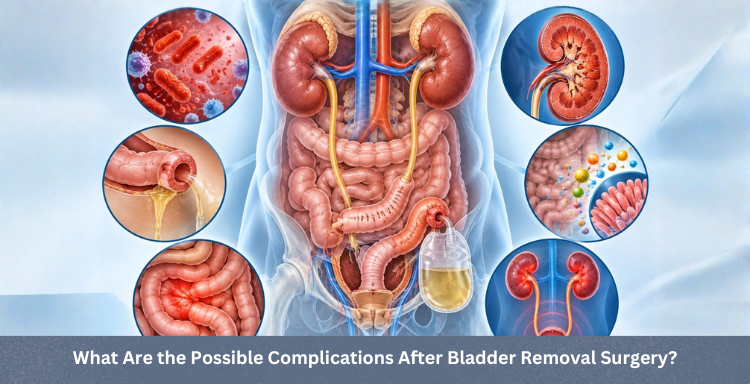
As with any major surgery, bladder removal carries risks, including infection, urinary leakage or blockage, temporary bowel changes, nutritional concerns, and long term changes in kidney function. Patients should seek prompt medical attention for fever, unusual pain, or changes in urine output.

Can Bladder Cancer Return After Bladder Removal Surgery?

There remains a possibility of bladder cancer recurrence after surgery, either locally or elsewhere, so doctors recommend long term surveillance through follow up imaging, blood and urine tests, and clinical examinations. Risk depends on the original cancer stage and tumour characteristics, and consistent follow up remains key to early detection.

Is Robotic Bladder Removal Surgery Helpful for Recovery?

Robotic radical cystectomy is a minimally invasive approach using robotic assisted instruments, with potential benefits including smaller incisions, reduced blood loss, and a shorter hospital stay for some patients.

Not every patient suits a robotic approach. Suitability depends on tumour stage and location, nearby structure involvement, general fitness, and kidney function, and is decided case by case. Regardless of approach, the experience of the team performing robotic bladder cancer surgery plays an important role in outcomes.

 
Speak with an Expert
White Call Us Now!
 

Importance of Follow Up After Bladder Removal Surgery

Long term follow up is central to post surgery care after cystectomy, involving scheduled clinical reviews, imaging at set intervals, kidney function assessment, and ongoing cancer surveillance based on individual risk, supporting both recovery and long term health.

How to Choose the Right Bladder Cancer Specialist?

Choosing the right specialist meaningfully influences outcomes and recovery. Important considerations include accurate cancer evaluation, experience in bladder cancer surgery, understanding of urinary reconstruction options, and a personalised treatment plan with long term follow up. A robotic uro oncologist with focused experience in bladder cancer management can guide patients through diagnosis, surgery, and recovery.

Dr. Anup Ramani: Bladder Cancer Specialist in Mumbai

Dr. Anup Ramani is a uro oncologist specialising in bladder cancer care, including diagnosis, surgical treatment, and post operative management. With experience in robotic urological surgery, he manages cases requiring detailed planning, including radical cystectomy and robotic radical cystectomy. Treatment planning is personalised for each patient, considering cancer stage, tumour characteristics, kidney function, and treatment goals, and Dr. Ramani helps patients understand their options, including urinary diversion methods, to make informed decisions.

As a bladder cancer specialist in India based in Mumbai, his approach centres on evidence based treatment, patient education, and long term follow up planning, with attention to quality of life after bladder removal surgery.

Conclusion

Recovery after bladder removal surgery is a gradual journey that unfolds over weeks and months, shaped by the type of urinary diversion, cancer stage, and overall health. While the early days focus on healing and adjusting to a new way of passing urine, most patients go on to regain confidence, resume daily activities, and settle into a manageable routine with the right support.

Staying consistent with follow up care, monitoring kidney function, and watching for any signs of recurrence all play an important part in long term wellbeing. With guidance from an experienced bladder cancer specialist, patients can approach life after bladder removal surgery with clarity and confidence.

Frequently Asked Questions

Patients are closely monitored in hospital for about one to two weeks, with care focused on pain management, wound care, and gradual movement.

Initial hospital recovery generally takes one to two weeks, while full adjustment, including adapting to the urinary diversion, can take several weeks to a few months.

Through an ileal conduit using an external bag, or a neobladder allowing urination through the urethra.

It involves adjusting to a new method of passing urine, a structured follow up schedule, and a gradual return to daily activities, with most patients adapting well over time.

The main options are an ileal conduit, using an external bag, and a neobladder, allowing internal storage and near normal urination, chosen based on individual health.

Yes, recurrence is possible, which is why regular follow up imaging and check ups are recommended for early detection.

Robotic radical cystectomy may involve smaller incisions and reduced blood loss for suitable patients, though recovery still depends on overall health and cancer stage.

Regular clinical visits, imaging evaluations, kidney function assessments, and ongoing cancer surveillance to support long term health.

Pain is usually highest in the early days after surgery and is managed with medication and supportive care. Discomfort gradually improves as the incision heals and patients become more comfortable with their urinary diversion.

PARTIAL PENECTOMY
  • Partial penectomy is done in cases where glans and distal penis is involved with carcinoma. 
  • Partial penectomy is a type of organ-preserving surgery. Preservation of sexual and micturational function depends on the surgical dissection and reconstruction of residual urethra.
Kidney Stone Removal
  • Patients who develop stones in the kidney or ureter, often experience severe pain.
  • This condition usually needs a procedure to remove the kidney stones.
  • This procedure is called ureteroscopy and is performed very commonly.
  • It does not require any cuts and hence it is painless.
  • The procedure is performed with an endoscope inserted through the penis under spinal anesthesia.
  • The scope is inserted through the penis into the kidney and stones are dissolved with a laser.
  • The procedure takes about 40-50 minutes. 
  • A catheter (urine pipe) is kept after the procedure to drain the bladder. A stent is kept in the kidney at the same time.
  • Patient is mobile and walking in the room the same evening.
  • Hospital stay is one night and patient is discharged the next day after removal of the catheter.
  • Patient has to come back after six weeks to remove the stent in the kidney.
  • Patients can resume office a week after surgery and heavy activities like running, weight lifting, a month after the procedure.
  • We offer fixed packages for this procedure which can be obtained by calling our helpline +91 9967666060.
  • Men with an enlarged prostate, which is a normal ageing changes, often experiencing difficulty passing urine. This condition usually needs a procedure to trim the prostate and relieve the blockage.
  • This procedure is called TURP and is performed very commonly.
  • It does not require any cuts and hence it is painless.
  • The procedure is performed with an endoscope inserted through the penis under spinal anaesthesia.
  • The overgrown prostate is dissolved with a laser bloodlessly.
  • The procedure takes about 40 minutes.
  • A catheter (urine pipe) is kept after the procedure to drain the bladder.
  • Patient is mobile and walking in the room the same evening.
  • Hospital stay is two nights and patient is discharged with the catheter, which is removed after 4 days.
  • Patients can resume office a week after surgery and heavy activities like running, weight lifting, a month after the procedure.
  • We offer fixed packages for this procedure which can be obtained by calling our helpline +91 9967666060.
ROBOTIC ADRENALECTOMY FOR ADRENAL GLAND TUMOUR
  • Robotic adrenalectomy is a sophisticated, complex surgery and it is very important that an experienced surgeon performs this surgery to avoid major complications.

  • Once the anesthesia is done, and patient positioned, three micro cuts (3mm each) are made in the patient’s abdomen.

  • The arms of the Da Vinci robot are connected to the cuts via ports (tubes).

  • Dr. Ramani then sits in the controlling console to perform the surgery.

  • On an average, a robotic adrenalectomy takes one hour.

  • The surgery is almost completely bloodless and there has never been any need to transfuse blood after surgery.

  • A urine catheter and bag to drain the bladder is inserted during surgery.

  • A tiny drain pipe may be inserted in the surgical side of the abdomen, connected to a bag.

  • Patient is kept nil-by-mouth the day of the surgery, with IV fluids. Sips of water are started the next day and solid food by day three.

  • The drain pipe, if kept, is removed in the room on day 2 after surgery.

  • The catheter is removed on day two after surgery.

  • Total hospital stay for robotic adrenalectomy is 4 nights (including night before surgery).

  • Post discharge, a doctor from the surgical team visits the patient at home/ hotel room once every day.

RETURN TO ACTIVITY
  • On the day of discharge, patient is totally self-sufficient. They are able to walk freely without any pain, dress themselves, shower, toilet and they do not need to hire any nurse or help at home. Almost all patients are back to work within 2 weeks of surgery.

  • Heavy activities like running, weight lifting can be resumed after a month

FOLLOW UP AFTER SURGERY
  • Follow up after an adrenalectomy is in the form of CT scans, once a year for 5 years.
    Local patients usually meet Dr. Ramani after two weeks to discuss report.

  • Outstation patients are counselled on a phone consultation.

ROBOTIC SURGERY FOR BLADDER CANCER
  • Dr. Ramani is one of the very few surgeons in India who has the expertise to perform a robotic surgery for bladder cancer, which includes removing the urinary bladder and reconstructing a new bladder robotically.
  • Robotic radical cystectomy is an extremely sophisticated, complex surgery and it is very important that an experienced surgeon performs this surgery to avoid major complications.
  • Once the anaesthesia is done, and patient positioned, six micro cuts (3mm each) are made in the patient’s abdomen.
  • The arms of the Da Vinci robot are connected to the cuts via ports (tubes).
  • Dr. Ramani then sits in the controlling console to perform the surgery.
  • On an average, a robotic radical cystectomy with an ileal conduit takes 3-4 hours.
  • The surgery is almost completely bloodless and there has never been any need to transfuse blood after surgery.
  • A urine catheter and bag to drain the new bladder is inserted during surgery.
  • Two tiny drain pipe in inserted in the surgical side of the abdomen, connected to a bag.
  • Patient is kept nil-by-mouth for 4 days after surgery with IV supplementation of patient’s daily requirements of calories, fats, carbohydrates, proteins and electrolytes.
  • The drain pipes are removed in the room on day 3-5 after surgery.
  • Total hospital stay for radical cystectomy is 8 nights (including night before surgery).
  • Post discharge, a doctor from the surgical team visits the patient at home/ hotel room once every day.
RETURN TO ACTIVITY
  • On the day of discharge, patient is totally self-sufficient. They are able to walk freely without any pain, dress themselves, shower, toilet and they do not need to hire any nurse or help at home.
  • Almost all patients are back to work within 6 weeks of surgery. Heavy activities like running, weight lifting can be resumed after two months.
FOLLOW UP AFTER SURGERY
  • Follow up after a radical a cystectomy is in the form of CT scans, once a year for 5 years.

  • Histopathology report: Local patients usually meet Dr. Ramani after two weeks to discuss report.

  • Outstation patients are counselled on a phone consult. Depending on the report, patient may or may not need chemotherapy after surgery.

  • If chemo is needed, patients may choose to get it done with a medical oncologist of their choice or avail the services of one of the four medical oncologists on our team.

ROBOTIC RADICAL/PARTIAL NEPHRECTOMY FOR KIDNEY CANCER
  • Robotic partial nephrectomy is a sophisticated, complex surgery and it is very important that an experienced surgeon performs this surgery to avoid major complications. Robotic radical (total) nephrectomy is
  • relatively easier but still requires significant experience to consistently deliver results.
  • Once the anaesthesia is done, and patient positioned, five micro cuts (3mm each) are made in the patient’s abdomen.
  • The arms of the Da Vinci robot are connected to the cuts via ports (tubes).
  • Dr. Ramani then sits in the controlling console to perform the surgery.
  • On an average, a robotic radical nephrectomy takes one hour and a robotic partial nephrectomy takes about an hour and half.
  • The surgery is almost completely bloodless and there has never been any need to transfuse blood after surgery.
  • A urine catheter and bag to drain the bladder is inserted during surgery.
  • A tiny drain pipe in inserted in the surgical side of the abdomen, connected to a bag.
  • Patient is kept nil-by-mouth the day of the surgery, with IV fluids. Sips of water are started the next day and solid food by day three.
  • The drain pipe is removed in the room on day 3 after surgery. The catheter is removed on day two after surgery.
  • Total hospital stay for radical/partial nephrectomy is 4 nights (including night before surgery).
  • Post discharge, a doctor from the surgical team visits the patient at home/ hotel room once every day.
RETURN TO ACTIVITY
  • On the day of discharge, patient is totally self- sufficient. 
  • They are able to walk freely without any pain, dress themselves, shower, toilet and they do not need to hire any nurse or help at home. 
  • Almost all patients are back to work within 2-3 weeks of surgery.
  • Heavy activities like running, weight lifting can be resumed after a month.
FOLLOW UP AFTER SURGERY
  • Follow up after a radical/partial Nephrectomy is in the form of CT scans, once a year for 5 years.
  • Local patients usually meet Dr. Ramani after two weeks to discuss report. 
  • Outstation patients are counselled on a phone consultation.