





By Dr. Anup Ramani
Share At:
Google AI ChatGPT Grok Perplexity

Listening Article

Objective

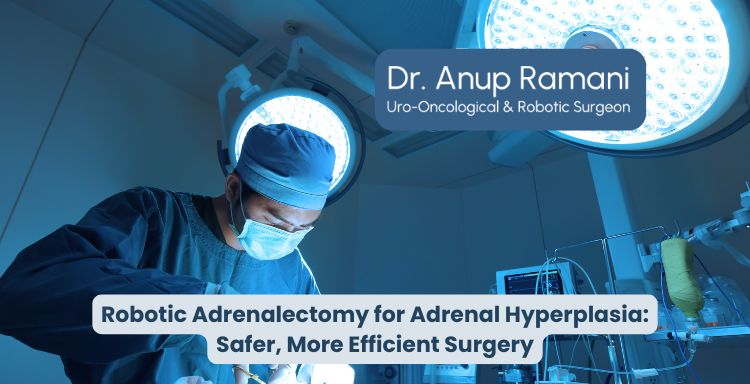
Robotic adrenalectomy is emerging as a game-changing procedure in the treatment of adrenal hyperplasia, offering superior precision, safety and recovery outcomes. This article explores how robotic adrenalectomy surgery provides a more targeted approach for the removal of hyperplastic adrenal tissue, preserving hormonal balance and minimizing patient risk. With advances in surgical robotics, adrenal gland treatment has entered a new era of minimal invasive, high-precision care.

What Is Adrenal Hyperplasia and Why Surgical Treatment May Be Necessary

Adrenal hyperplasia refers to the abnormal enlargement or overgrowth of the adrenal glands, which are responsible for producing essential hormones such as cortisol, aldosterone and androgens. When these glands become hyperplastic, hormone levels can become severely imbalanced, leading to a range of health issues including high blood pressure, muscle weakness, fatigue, weight gain and in some cases, virilization or menstrual irregularities.

The condition can be congenital (present from birth) or acquired later in life. While some cases are managed with medication, others – particularly those resistant to medical therapy or causing significant hormonal imbalance – require surgical intervention. In these situations, an adrenal gland surgeon may recommend adrenalectomy, the surgical removal of one or both adrenal glands.

Robotic adrenalectomy offers a modern solution to this surgical need. By enabling precise removal of only the diseased or hyperplastic tissue while preserving healthy adrenal function, robotic adrenalectomy treatment provides a safer and more controlled approach to managing adrenal hyperplasia. In cases where only one gland is affected, partial or total removal of the gland using robotic techniques can correct the hormonal imbalance without compromising overall adrenal function.

How Robotic Adrenalectomy Enhances Precision in Removing Hyperplastic Adrenal Tissue

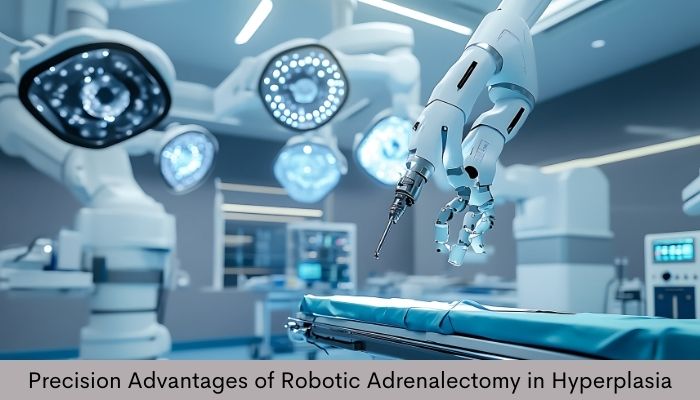
In adrenal hyperplasia, precision in tissue removal is absolutely critical. Over-removal can impair hormonal regulation, while under-removal may leave behind hyperactive tissue, resulting in persistent symptoms. Robotic adrenalectomy solves this challenge by giving the surgeon enhanced dexterity and control, even in confined retroperitoneal spaces where the adrenal glands reside.

Robotic adrenalectomy surgeons utilize high-definition, three-dimensional imaging to differentiate between hyperplastic and healthy adrenal tissue. This enables the focused removal of only the abnormal areas while preserving as much normal gland as possible. The advanced robotic arms provide articulated movements that allow delicate dissection around nearby structures like the kidneys, liver, spleen and major blood vessels.

Additionally, robotic adrenalectomy treatment allows surgeons to access tumors or hyperplastic regions that are difficult to reach with conventional laparoscopic tools. This is especially important for patients with bilateral adrenal hyperplasia or smaller nodular overgrowths that require precise targeting. With robotics, the surgical margin is cleaner and complications such as adrenal vein injury or excessive tissue resection are significantly reduced.

The result is a more accurate, safer surgery that addresses the hormonal imbalance without unnecessary disruption to adrenal function – something that is especially crucial in long-term management of the patient’s endocrine health.

Email Dr. Ramani for Robotic Prostate Cancer Surgery

Minimizing Surgical Risk: Safety Advantages of Robotic Techniques in Adrenal Procedures

Robotic adrenalectomy has been proven to reduce surgical risks significantly compared to open or even standard laparoscopic approaches. Since the adrenal glands are situated near vital structures such as the diaphragm, inferior vena cava and renal vessels, any error during surgery can lead to severe complications like bleeding organ injury or hormonal crises.

With robotic systems, surgeons gain superior visualization and mechanical control, which reduces the likelihood of these complications. The magnified 3D view helps identify and preserve critical anatomical landmarks. Robotic instruments also reduce hand tremors and allow for greater stability, which is particularly important when working in the narrow retroperitoneal space.

Another major safety benefit is the reduced intraoperative blood loss. Since the adrenal glands are highly vascular, controlling bleeding is essential. Robotic adrenalectomy surgery facilitates this through precise cauterization and minimal tissue manipulation. As a result, most patients experience less postoperative pain, lower risk of infection and a shorter hospital stay.

Moreover, robotic adrenalectomy is associated with fewer conversions to open surgery – a major concern in difficult adrenal cases. For patients, this translates into fewer complications, better cosmetic outcomes and faster return to normal activities, all without compromising surgical safety.


What Our Patients Are Saying

"Dr. Anup Ramani is incredibly knowledgeable and took the time to answer all our questions. His commitment to healing and caring for others is truly inspiring. Highly recommend."
Dhara Sodha
On Google

Improved Efficiency and Recovery: Faster Outcomes with Robotic Adrenal Surgery

One of the most compelling reasons patients and surgeons are choosing Adrenal Gland treatment is its superior recovery profile. Compared to traditional approaches, robotic adrenalectomy leads to faster surgeries, fewer complications and quicker discharge from the hospital. Many patients go home within 24 to 48 hours of the procedure and most resume normal activities within one to two weeks.

The minimal invasive nature of robotic adrenalectomy – using small incisions – results in less trauma to the abdominal wall and internal organs. This means reduced postoperative pain, lower dependence on pain medication and minimized scarring. In addition, shorter operative time and improved efficiency allow hospitals to manage resources better and reduce healthcare costs in the long run.

From a patient perspective, quicker recovery also reduces time off work and the psychological stress of prolonged hospitalization. These benefits are especially meaningful for individuals managing chronic conditions related to adrenal hyperplasia, as prompt recovery supports better long-term hormonal stability and quality of life.

Furthermore, robotic adrenalectomy surgeons report high patient satisfaction due to improved surgical outcomes and fewer complications, making it a highly recommended option for adrenal gland treatment.

Preserving Hormonal Balance: The Importance of Controlled Tissue Resection

The adrenal glands surgery are critical components of the body’s hormonal regulation system, producing essential hormones like cortisol, aldosterone and adrenaline. In adrenal hyperplasia, excess hormone production leads to serious complications such as Cushing’s syndrome or Conn’s syndrome. However, the surgical goal is not always to remove the entire gland – especially if both glands are affected.

Robotic adrenalectomy allows for adrenalectomy in appropriate cases, meaning only the hyperplastic portion of the gland is removed. This approach helps preserve some adrenal function, reducing the risk of post-operative adrenal insufficiency and the need for lifelong hormone replacement therapy.

Controlled tissue resection using robotics enables adrenal gland surgeons to work within narrow anatomical margins, identify hyperplastic nodules and dissect them away from healthy tissue. This is extremely difficult in open or even laparoscopic surgery due to the gland’s small size and complex vascular supply.

Preserving hormonal balance while eliminating the source of overproduction is a delicate task – one that robotic adrenalectomy is uniquely equipped to handle. With the help of robotic-assisted surgery, adrenal gland treatment in India and worldwide has reached new standards in endocrine surgical care.

Surgeon Control and Visualization: Why Robotics Makes a Difference in Adrenalectomy

One of the most significant improvements that robotic adrenalectomy introduces is enhanced surgeon control and visualization. Unlike laparoscopic tools, robotic instruments offer seven degrees of freedom, mimicking the flexibility of the human wrist. This allows for more precise dissection, suturing and cauterization, especially in the narrow space where the adrenal glands lie.

The surgical console provides the adrenal gland surgeon with a crystal-clear 3D view of the operative field, magnified up to 10 times. This depth perception and clarity are essential when identifying hyperplastic tissue versus healthy gland, blood vessels and surrounding structures.

Additionally, the ergonomic design of the robotic console reduces surgeon fatigue during long or complex procedures. With steady hands and clear visuals, the risk of surgical error is reduced and outcomes are more consistent. This technology empowers robotic adrenalectomy surgeons to perform delicate maneuvers with confidence, increasing overall surgical success rates.

This is particularly impactful in Adrenal Gland Surgery, where the stakes are high and the margins for error are low. Robotics provides the perfect combination of visibility, control and precision necessary for safe and effective adrenal gland treatment.

Call us for Kidney Cancer Treatment

Clinical Outcomes and Patient Benefits: Evidence Supporting Robotic Adrenalectomy

A growing body of clinical research supports the efficacy and safety of robotic adrenalectomy in managing adrenal hyperplasia. Studies have shown that patients undergoing robotic adrenalectomy experience significantly lower blood loss, fewer complications and shorter hospital stays compared to those undergoing traditional open surgery.

Robotic adrenalectomy treatment has also demonstrated excellent outcomes in terms of hormonal normalization. In many cases, patients have seen rapid improvement in symptoms such as hypertension, fatigue and hormonal imbalance post-surgery. Furthermore, long-term follow-up studies confirm that robotic adrenalectomy results in lower recurrence rates and better patient satisfaction.

In specialized centers offering adrenal gland treatment in India, robotic adrenalectomy is becoming the standard of care due to its proven advantages. As more adrenal gland surgeons gain experience with robotic systems, patient outcomes continue to improve, reinforcing the value of this innovative surgical method.

Ultimately, robotic adrenalectomy combines cutting-edge technology with clinical excellence, making it the safest and most efficient surgical option for treating adrenal hyperplasia today.

FAQs

It’s a minimal invasive procedure using robotic technology to remove adrenal gland tissue with high precision and control.

Yes, it offers reduced blood loss, fewer complications and faster recovery compared to open or laparoscopic methods.

Most cases can be treated robotically, but suitability depends on the patient’s anatomy and disease severity.

Not always – if one gland is preserved or partial removal is done, you may retain normal hormone function.

About Author

PARTIAL PENECTOMY
  • Partial penectomy is done in cases where glans and distal penis is involved with carcinoma. 
  • Partial penectomy is a type of organ-preserving surgery. Preservation of sexual and micturational function depends on the surgical dissection and reconstruction of residual urethra.
Kidney Stone Removal
  • Patients who develop stones in the kidney or ureter, often experience severe pain.
  • This condition usually needs a procedure to remove the kidney stones.
  • This procedure is called ureteroscopy and is performed very commonly.
  • It does not require any cuts and hence it is painless.
  • The procedure is performed with an endoscope inserted through the penis under spinal anesthesia.
  • The scope is inserted through the penis into the kidney and stones are dissolved with a laser.
  • The procedure takes about 40-50 minutes. 
  • A catheter (urine pipe) is kept after the procedure to drain the bladder. A stent is kept in the kidney at the same time.
  • Patient is mobile and walking in the room the same evening.
  • Hospital stay is one night and patient is discharged the next day after removal of the catheter.
  • Patient has to come back after six weeks to remove the stent in the kidney.
  • Patients can resume office a week after surgery and heavy activities like running, weight lifting, a month after the procedure.
  • We offer fixed packages for this procedure which can be obtained by calling our helpline +91 9967666060.
  • Men with an enlarged prostate, which is a normal ageing changes, often experiencing difficulty passing urine. This condition usually needs a procedure to trim the prostate and relieve the blockage.
  • This procedure is called TURP and is performed very commonly.
  • It does not require any cuts and hence it is painless.
  • The procedure is performed with an endoscope inserted through the penis under spinal anaesthesia.
  • The overgrown prostate is dissolved with a laser bloodlessly.
  • The procedure takes about 40 minutes.
  • A catheter (urine pipe) is kept after the procedure to drain the bladder.
  • Patient is mobile and walking in the room the same evening.
  • Hospital stay is two nights and patient is discharged with the catheter, which is removed after 4 days.
  • Patients can resume office a week after surgery and heavy activities like running, weight lifting, a month after the procedure.
  • We offer fixed packages for this procedure which can be obtained by calling our helpline +91 9967666060.
ROBOTIC ADRENALECTOMY FOR ADRENAL GLAND TUMOUR
  • Robotic adrenalectomy is a sophisticated, complex surgery and it is very important that an experienced surgeon performs this surgery to avoid major complications.

  • Once the anesthesia is done, and patient positioned, three micro cuts (3mm each) are made in the patient’s abdomen.

  • The arms of the Da Vinci robot are connected to the cuts via ports (tubes).

  • Dr. Ramani then sits in the controlling console to perform the surgery.

  • On an average, a robotic adrenalectomy takes one hour.

  • The surgery is almost completely bloodless and there has never been any need to transfuse blood after surgery.

  • A urine catheter and bag to drain the bladder is inserted during surgery.

  • A tiny drain pipe may be inserted in the surgical side of the abdomen, connected to a bag.

  • Patient is kept nil-by-mouth the day of the surgery, with IV fluids. Sips of water are started the next day and solid food by day three.

  • The drain pipe, if kept, is removed in the room on day 2 after surgery.

  • The catheter is removed on day two after surgery.

  • Total hospital stay for robotic adrenalectomy is 4 nights (including night before surgery).

  • Post discharge, a doctor from the surgical team visits the patient at home/ hotel room once every day.

RETURN TO ACTIVITY
  • On the day of discharge, patient is totally self-sufficient. They are able to walk freely without any pain, dress themselves, shower, toilet and they do not need to hire any nurse or help at home. Almost all patients are back to work within 2 weeks of surgery.

  • Heavy activities like running, weight lifting can be resumed after a month

FOLLOW UP AFTER SURGERY
  • Follow up after an adrenalectomy is in the form of CT scans, once a year for 5 years.
    Local patients usually meet Dr. Ramani after two weeks to discuss report.

  • Outstation patients are counselled on a phone consultation.

ROBOTIC SURGERY FOR BLADDER CANCER
  • Dr. Ramani is one of the very few surgeons in India who has the expertise to perform a robotic surgery for bladder cancer, which includes removing the urinary bladder and reconstructing a new bladder robotically.
  • Robotic radical cystectomy is an extremely sophisticated, complex surgery and it is very important that an experienced surgeon performs this surgery to avoid major complications.
  • Once the anaesthesia is done, and patient positioned, six micro cuts (3mm each) are made in the patient’s abdomen.
  • The arms of the Da Vinci robot are connected to the cuts via ports (tubes).
  • Dr. Ramani then sits in the controlling console to perform the surgery.
  • On an average, a robotic radical cystectomy with an ileal conduit takes 3-4 hours.
  • The surgery is almost completely bloodless and there has never been any need to transfuse blood after surgery.
  • A urine catheter and bag to drain the new bladder is inserted during surgery.
  • Two tiny drain pipe in inserted in the surgical side of the abdomen, connected to a bag.
  • Patient is kept nil-by-mouth for 4 days after surgery with IV supplementation of patient’s daily requirements of calories, fats, carbohydrates, proteins and electrolytes.
  • The drain pipes are removed in the room on day 3-5 after surgery.
  • Total hospital stay for radical cystectomy is 8 nights (including night before surgery).
  • Post discharge, a doctor from the surgical team visits the patient at home/ hotel room once every day.
RETURN TO ACTIVITY
  • On the day of discharge, patient is totally self-sufficient. They are able to walk freely without any pain, dress themselves, shower, toilet and they do not need to hire any nurse or help at home.
  • Almost all patients are back to work within 6 weeks of surgery. Heavy activities like running, weight lifting can be resumed after two months.
FOLLOW UP AFTER SURGERY
  • Follow up after a radical a cystectomy is in the form of CT scans, once a year for 5 years.

  • Histopathology report: Local patients usually meet Dr. Ramani after two weeks to discuss report.

  • Outstation patients are counselled on a phone consult. Depending on the report, patient may or may not need chemotherapy after surgery.

  • If chemo is needed, patients may choose to get it done with a medical oncologist of their choice or avail the services of one of the four medical oncologists on our team.

ROBOTIC RADICAL/PARTIAL NEPHRECTOMY FOR KIDNEY CANCER
  • Robotic partial nephrectomy is a sophisticated, complex surgery and it is very important that an experienced surgeon performs this surgery to avoid major complications. Robotic radical (total) nephrectomy is
  • relatively easier but still requires significant experience to consistently deliver results.
  • Once the anaesthesia is done, and patient positioned, five micro cuts (3mm each) are made in the patient’s abdomen.
  • The arms of the Da Vinci robot are connected to the cuts via ports (tubes).
  • Dr. Ramani then sits in the controlling console to perform the surgery.
  • On an average, a robotic radical nephrectomy takes one hour and a robotic partial nephrectomy takes about an hour and half.
  • The surgery is almost completely bloodless and there has never been any need to transfuse blood after surgery.
  • A urine catheter and bag to drain the bladder is inserted during surgery.
  • A tiny drain pipe in inserted in the surgical side of the abdomen, connected to a bag.
  • Patient is kept nil-by-mouth the day of the surgery, with IV fluids. Sips of water are started the next day and solid food by day three.
  • The drain pipe is removed in the room on day 3 after surgery. The catheter is removed on day two after surgery.
  • Total hospital stay for radical/partial nephrectomy is 4 nights (including night before surgery).
  • Post discharge, a doctor from the surgical team visits the patient at home/ hotel room once every day.
RETURN TO ACTIVITY
  • On the day of discharge, patient is totally self- sufficient. 
  • They are able to walk freely without any pain, dress themselves, shower, toilet and they do not need to hire any nurse or help at home. 
  • Almost all patients are back to work within 2-3 weeks of surgery.
  • Heavy activities like running, weight lifting can be resumed after a month.
FOLLOW UP AFTER SURGERY
  • Follow up after a radical/partial Nephrectomy is in the form of CT scans, once a year for 5 years.
  • Local patients usually meet Dr. Ramani after two weeks to discuss report. 
  • Outstation patients are counselled on a phone consultation.