By Dr. Anup Ramani
Share At:
Google AI ChatGPT Grok Perplexity

Listening Article

Objective:

To provide a comprehensive, non-technical and supportive day-by-day guide for patients managing a urinary catheter at home following robotic radical prostatectomy, focusing on hygiene, comfort and the recovery timeline without relying on complex medical statistics or numeric data.

Navigating Catheter Care After Robotic Prostatectomy

Recovering from a major procedure requires patience, especially when it involves the delicate healing process of the urinary tract. For men undergoing prostate cancer treatment, specifically the removal of the prostate, the presence of a catheter is a temporary but crucial part of the journey. This guide explores the ten-day period following surgery, helping you navigate the daily nuances of catheter care with confidence.

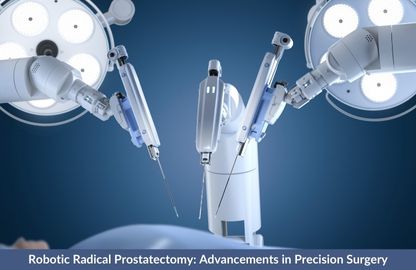
The Role of Robotic Radical Prostatectomy

Modern medical advancements have shifted significantly towards robotic radical prostatectomy. This minimal invasive approach allows for greater precision, reduced blood loss and generally faster healing compared to traditional open surgery. However, regardless of whether you choose the best center for prostate cancer treatment or a local facility, the anatomy requires time to mend.

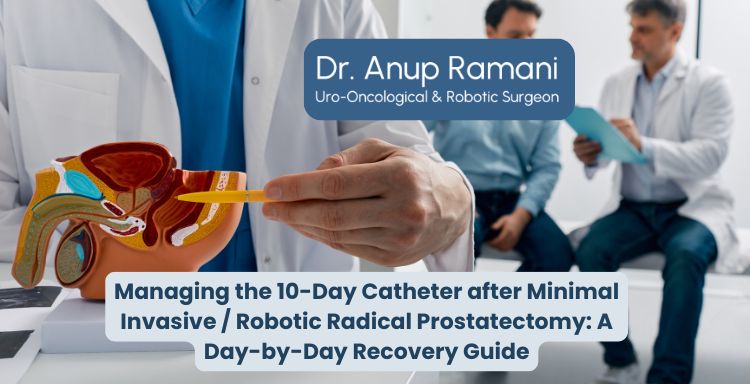
During the surgery, the prostate cancer surgeon removes the prostate gland, which sits between the bladder and the urethra. Once removed, the bladder must be reconnected to the urethra. This connection, known as the anastomosis, is watertight but fragile. The catheter acts as a splint, bridging this gap to allow the tissue to knit together properly without being disturbed by the flow of urine. While the cost of robotic prostatectomy in India and other regions is often a consideration for patients during the planning phase, the true value of the procedure becomes evident in these recovery stages where the focus shifts entirely to healing and functionality.

Day One: Transitioning from Hospital to Home

Leaving the hospital marks the beginning of your independence. Most patients are discharged within a day or two after robotic prostate cancer surgery. At this stage, you will have a catheter in place, secured to your leg.

The Setup: Before leaving, the nursing staff will likely switch you from a large bedside drainage bag to a smaller leg bag. This allows for mobility, which is a critical component of prostate cancer operation recovery. The leg bag can be worn under loose trousers, making it discreet.

Action Plan:

  • Secure the Tube: Ensure the catheter tube is stabilized with a securement device or tape on your thigh. This prevents accidental tugging, which can be uncomfortable.
  • Hydration: Start drinking water immediately. Good hydration keeps the urine flowing freely and prevents clots from blocking the tube.
  • Night Switch: In the evening, switch back to the larger drainage bag. This allows you to sleep through the night without needing to wake up to empty a small leg bag. Always keep the night bag lower than your bladder to rely on gravity for drainage.

Message Dr. Ramani on WhatsApp for Prostate Cancer Surgery

Day Two: Adjusting to the New Normal

By the second day, the anesthesia has fully worn off and you are becoming more aware of the catheter. You might experience bladder spasms – sudden, strong urges to urinate even though the catheter is draining the bladder continuously. This is the bladder reacting to the foreign object.

Managing Spasms: Prostate cancer specialists often prescribe medication to relax the bladder muscles. If you feel a spasm, try to relax your pelvic floor rather than fighting it. The sensation usually passes quickly.

Urine Color: Do not be alarmed if the urine changes color. It is normal to see pink or reddish tints, especially after you have moved around or had a bowel movement. This is a common aspect of prostate cancer surgery recovery. The key is to continue drinking fluids to flush the system until the urine runs clear again.

Day Three: Hygiene and Infection Prevention

Infection prevention is paramount. Bacteria can travel up the catheter tube, so daily cleaning is essential.

Cleaning Routine:

  • Wash your hands thoroughly before touching the catheter or bag.
  • Clean the area where the catheter enters the body (the meatus) with mild soap and water during your daily shower.
  • Avoid aggressive scrubbing. gently remove any crust or debris that may accumulate.
  • Prostatectomy surgeons advise against applying creams, powders or lotions around the catheter site unless specifically prescribed, as these can trap bacteria or irritate the skin.

What Our Patients Are Saying

"Dr Ramani is excellent not only as a best doctor but also a genuine and compassionate human being. He gives the kind of confidence with his immense experience over the years which is a life saver in a true sense. I say it from my personal experience that he is as good as it gets.its because of him it’s normal life and work."
Tanmoy Ganguli

Day Four: Improving Mobility and Diet

Walking is one of the most effective ways to speed up prostate cancer operation recovery time. It improves blood circulation, reduces the risk of blood clots and helps “wake up” the digestive system.

Dietary Focus: Constipation is a common enemy of catheter comfort. A full bowel presses against the bladder and the catheter, causing pain and drainage issues. Focus on a high-fiber diet including fruits, vegetables and whole grains. Your doctor may also recommend a stool softener. Avoid straining during bowel movements, as this puts pressure on the healing surgical site.

Day Five: Troubleshooting Common Issues

By the midway point, you might encounter minor technical issues.

  • No Drainage: If the bag seems empty, check for kinks in the tubing. Ensure you are not lying on the tube. Sometimes, changing your position or standing up can get the flow moving again.
  • Leaking Around the Tube: This is called “bypassing.” It happens when the bladder spasms or if the catheter is blocked. If the urine is still draining into the bag, a small amount of leakage around the tube is usually manageable with a pad. However, if the bag is empty and you are in pain, contact your healthcare provider immediately.

Day Six: The Mental Aspect of Recovery

Wearing a catheter can be mentally taxing. It is cumbersome and serves as a constant reminder of the surgery. It is helpful to remind yourself that this is temporary. Many men find it useful to wear sweatpants or shorts that are easy to maneuver.

Reflecting on the journey, patients often realize that while researching the cost of robotic prostatectomy in India or elsewhere was stressful, the investment in robotic surgery for prostate cancer often pays off in these middle days with less pain and smaller incisions compared to open surgery.

Day Seven: The Home Stretch

You are now adept at managing the bags. You have likely developed a routine for switching between the leg bag and the night bag.

Activity Level: You might feel energetic enough to do light household tasks, but avoid heavy lifting. The internal healing is still fragile. Best prostatectomy surgeons emphasize that feeling good does not mean you are fully healed. Continue to prioritize rest and short, frequent walks over strenuous activity.

Day Eight: Preparing for Removal

Anticipation builds as you approach the removal day. You might feel anxious about whether you will be able to control your urine once the catheter is out. This is a universal concern.

Preparation:

  • Ensure you have a supply of incontinence pads or adult diapers.
  • Review the pelvic floor exercises (Kegels) your medical team described, but do not start performing them vigorously while the catheter is still in.
  • Hydrate well.

Day Nine: The Final Day of Catheterization

On the day before removal, double-check your appointment time. Some clinics perform a cystogram before removing the catheter to ensure the connection between the bladder and urethra has healed completely.

Ensure your bowels are moving regularly. A full rectum can make the removal procedure slightly more uncomfortable, though it is generally painless.

Robotic Surgery for Prostate Cancer Call Dr. Ramani

Day Ten: Removal and liberation

The removal process is surprisingly quick and usually painless. The nurse deflates the small balloon holding the catheter inside the bladder and gently slides the tube out. The relief is immediate.

What to Expect Immediately After:

  • Incontinence: Do not expect perfect control immediately. Most men experience leakage right after removal. This is because the sphincter muscles have been inactive for ten days and need time to regain strength.
  • Urgency: You may feel a sudden, strong need to urinate frequently.
  • Starting Kegels: Now is the time to begin your pelvic floor rehabilitation in earnest. Prostate cancer treatment in India and globally places a high emphasis on post-operative physiotherapy to regain continence.

The Road Ahead: While the catheter is gone, prostate cancer operation recovery continues. Urinary control will improve over the coming weeks and months. The ten days with the catheter were an investment in a leak-free, watertight healing process that sets the foundation for your long-term health.

Frequently Asked Questions

Yes, you can shower daily. Keep the bag attached to the catheter and hang it nearby or use a strap to keep it on your leg, then gently pat the area dry afterwards.

Mildly bloody or pink urine is common, especially after walking or bowel movements. Drink plenty of water to flush it out, but seek help if it becomes thick or clot-heavy.

Check for kinks in the tubing and change your body position. If there is still no drainage after an hour or you feel bladder pain/fullness, contact your doctor immediately.

The removal is generally very quick and causes only mild discomfort or a strange sensation, but it is rarely painful. The relief of having it out is immediate.

Recovery varies for every man. You may have leakage for a few weeks to several months; consistent pelvic floor exercises are the key to regaining control.

About Author

PARTIAL PENECTOMY
  • Partial penectomy is done in cases where glans and distal penis is involved with carcinoma. 
  • Partial penectomy is a type of organ-preserving surgery. Preservation of sexual and micturational function depends on the surgical dissection and reconstruction of residual urethra.
Kidney Stone Removal
  • Patients who develop stones in the kidney or ureter, often experience severe pain.
  • This condition usually needs a procedure to remove the kidney stones.
  • This procedure is called ureteroscopy and is performed very commonly.
  • It does not require any cuts and hence it is painless.
  • The procedure is performed with an endoscope inserted through the penis under spinal anesthesia.
  • The scope is inserted through the penis into the kidney and stones are dissolved with a laser.
  • The procedure takes about 40-50 minutes. 
  • A catheter (urine pipe) is kept after the procedure to drain the bladder. A stent is kept in the kidney at the same time.
  • Patient is mobile and walking in the room the same evening.
  • Hospital stay is one night and patient is discharged the next day after removal of the catheter.
  • Patient has to come back after six weeks to remove the stent in the kidney.
  • Patients can resume office a week after surgery and heavy activities like running, weight lifting, a month after the procedure.
  • We offer fixed packages for this procedure which can be obtained by calling our helpline +91 9967666060.
  • Men with an enlarged prostate, which is a normal ageing changes, often experiencing difficulty passing urine. This condition usually needs a procedure to trim the prostate and relieve the blockage.
  • This procedure is called TURP and is performed very commonly.
  • It does not require any cuts and hence it is painless.
  • The procedure is performed with an endoscope inserted through the penis under spinal anaesthesia.
  • The overgrown prostate is dissolved with a laser bloodlessly.
  • The procedure takes about 40 minutes.
  • A catheter (urine pipe) is kept after the procedure to drain the bladder.
  • Patient is mobile and walking in the room the same evening.
  • Hospital stay is two nights and patient is discharged with the catheter, which is removed after 4 days.
  • Patients can resume office a week after surgery and heavy activities like running, weight lifting, a month after the procedure.
  • We offer fixed packages for this procedure which can be obtained by calling our helpline +91 9967666060.
ROBOTIC ADRENALECTOMY FOR ADRENAL GLAND TUMOUR
  • Robotic adrenalectomy is a sophisticated, complex surgery and it is very important that an experienced surgeon performs this surgery to avoid major complications.

  • Once the anesthesia is done, and patient positioned, three micro cuts (3mm each) are made in the patient’s abdomen.

  • The arms of the Da Vinci robot are connected to the cuts via ports (tubes).

  • Dr. Ramani then sits in the controlling console to perform the surgery.

  • On an average, a robotic adrenalectomy takes one hour.

  • The surgery is almost completely bloodless and there has never been any need to transfuse blood after surgery.

  • A urine catheter and bag to drain the bladder is inserted during surgery.

  • A tiny drain pipe may be inserted in the surgical side of the abdomen, connected to a bag.

  • Patient is kept nil-by-mouth the day of the surgery, with IV fluids. Sips of water are started the next day and solid food by day three.

  • The drain pipe, if kept, is removed in the room on day 2 after surgery.

  • The catheter is removed on day two after surgery.

  • Total hospital stay for robotic adrenalectomy is 4 nights (including night before surgery).

  • Post discharge, a doctor from the surgical team visits the patient at home/ hotel room once every day.

RETURN TO ACTIVITY
  • On the day of discharge, patient is totally self-sufficient. They are able to walk freely without any pain, dress themselves, shower, toilet and they do not need to hire any nurse or help at home. Almost all patients are back to work within 2 weeks of surgery.

  • Heavy activities like running, weight lifting can be resumed after a month

FOLLOW UP AFTER SURGERY
  • Follow up after an adrenalectomy is in the form of CT scans, once a year for 5 years.
    Local patients usually meet Dr. Ramani after two weeks to discuss report.

  • Outstation patients are counselled on a phone consultation.

ROBOTIC SURGERY FOR BLADDER CANCER
  • Dr. Ramani is one of the very few surgeons in India who has the expertise to perform a robotic surgery for bladder cancer, which includes removing the urinary bladder and reconstructing a new bladder robotically.
  • Robotic radical cystectomy is an extremely sophisticated, complex surgery and it is very important that an experienced surgeon performs this surgery to avoid major complications.
  • Once the anaesthesia is done, and patient positioned, six micro cuts (3mm each) are made in the patient’s abdomen.
  • The arms of the Da Vinci robot are connected to the cuts via ports (tubes).
  • Dr. Ramani then sits in the controlling console to perform the surgery.
  • On an average, a robotic radical cystectomy with an ileal conduit takes 3-4 hours.
  • The surgery is almost completely bloodless and there has never been any need to transfuse blood after surgery.
  • A urine catheter and bag to drain the new bladder is inserted during surgery.
  • Two tiny drain pipe in inserted in the surgical side of the abdomen, connected to a bag.
  • Patient is kept nil-by-mouth for 4 days after surgery with IV supplementation of patient’s daily requirements of calories, fats, carbohydrates, proteins and electrolytes.
  • The drain pipes are removed in the room on day 3-5 after surgery.
  • Total hospital stay for radical cystectomy is 8 nights (including night before surgery).
  • Post discharge, a doctor from the surgical team visits the patient at home/ hotel room once every day.
RETURN TO ACTIVITY
  • On the day of discharge, patient is totally self-sufficient. They are able to walk freely without any pain, dress themselves, shower, toilet and they do not need to hire any nurse or help at home.
  • Almost all patients are back to work within 6 weeks of surgery. Heavy activities like running, weight lifting can be resumed after two months.
FOLLOW UP AFTER SURGERY
  • Follow up after a radical a cystectomy is in the form of CT scans, once a year for 5 years.

  • Histopathology report: Local patients usually meet Dr. Ramani after two weeks to discuss report.

  • Outstation patients are counselled on a phone consult. Depending on the report, patient may or may not need chemotherapy after surgery.

  • If chemo is needed, patients may choose to get it done with a medical oncologist of their choice or avail the services of one of the four medical oncologists on our team.

ROBOTIC RADICAL/PARTIAL NEPHRECTOMY FOR KIDNEY CANCER
  • Robotic partial nephrectomy is a sophisticated, complex surgery and it is very important that an experienced surgeon performs this surgery to avoid major complications. Robotic radical (total) nephrectomy is
  • relatively easier but still requires significant experience to consistently deliver results.
  • Once the anaesthesia is done, and patient positioned, five micro cuts (3mm each) are made in the patient’s abdomen.
  • The arms of the Da Vinci robot are connected to the cuts via ports (tubes).
  • Dr. Ramani then sits in the controlling console to perform the surgery.
  • On an average, a robotic radical nephrectomy takes one hour and a robotic partial nephrectomy takes about an hour and half.
  • The surgery is almost completely bloodless and there has never been any need to transfuse blood after surgery.
  • A urine catheter and bag to drain the bladder is inserted during surgery.
  • A tiny drain pipe in inserted in the surgical side of the abdomen, connected to a bag.
  • Patient is kept nil-by-mouth the day of the surgery, with IV fluids. Sips of water are started the next day and solid food by day three.
  • The drain pipe is removed in the room on day 3 after surgery. The catheter is removed on day two after surgery.
  • Total hospital stay for radical/partial nephrectomy is 4 nights (including night before surgery).
  • Post discharge, a doctor from the surgical team visits the patient at home/ hotel room once every day.
RETURN TO ACTIVITY
  • On the day of discharge, patient is totally self- sufficient. 
  • They are able to walk freely without any pain, dress themselves, shower, toilet and they do not need to hire any nurse or help at home. 
  • Almost all patients are back to work within 2-3 weeks of surgery.
  • Heavy activities like running, weight lifting can be resumed after a month.
FOLLOW UP AFTER SURGERY
  • Follow up after a radical/partial Nephrectomy is in the form of CT scans, once a year for 5 years.
  • Local patients usually meet Dr. Ramani after two weeks to discuss report. 
  • Outstation patients are counselled on a phone consultation.