




Dr Anup Ramani @ Copyright 2024
By Dr. Anup Ramani
AI Summary
Kidney stone removal without surgery is possible when a stone is small, symptoms are controlled, and urine flow is not blocked. Small stones may pass naturally with medical guidance, while larger or blocked stones often need a procedure to protect kidney function. Doctors decide by weighing stone size, stone location, symptoms, urine flow, kidney function, infection risk, and overall patient health.
What Are Kidney Stones and Why Do Some Need Kidney Stone Treatment?
Kidney stones are hard deposits of minerals and salts that form inside the kidney. When a stone moves into the ureter, the narrow tube that carries urine to the bladder, it can cause sudden pain and blood in the urine.
Kidney stone removal without surgery is a realistic goal for many patients, because small stones can travel through the urinary tract on their own. Other stones are too large, too firmly lodged, or too risky to wait for.
Treatment differs for every patient, so a urologist’s evaluation shows which path is safe.
Kidney Stone Removal Without Surgery: When Is It Possible?
Treatment without surgery usually means one of two things. Either the stone is monitored while it passes with the help of medicines, or it is treated with a procedure that needs no cuts on the skin.
Doctors may suggest observation when a stone is small, pain is controlled, and there is no infection. A scan is needed first, because a stone that looks harmless can still block the kidney. Doctors consider:
- Stone size
- Stone location
- Stone composition
- Pain severity
- Urine flow
- Kidney function
- Infection risk
Can Kidney Stones Dissolve Naturally?
Most kidney stones do not dissolve on their own. Calcium stones, the most common type, need to pass or be removed. Uric acid stones are the main exception, because they can shrink when a doctor prescribes medicine that makes urine less acidic.
That is why diagnosis matters before trying any home remedy. Drinking enough water lowers the risk of new stones, but water alone rarely dissolves an existing one. A stone that seems to disappear has usually passed, not dissolved.
Kidney Stones Passing Naturally: Which Stones Can Pass?
Size is the strongest guide. The 2007 AUA and EAU guideline on ureteral stones, published in the Journal of Urology, estimated the chance of passing as follows.
| Ureteral stone size | Estimated chance of passing naturally |
| 5 mm or smaller | About 68 percent |
| Above 5 mm up to 10 mm | About 47 percent |
| Above 10 mm | Unlikely, so treatment is usually advised |
These are guideline estimates, and individual results vary. Location matters too. Stones near the bladder end of the ureter pass more often than stones near the kidney.
Small kidney stone treatment usually means watching symptoms, drinking fluids, and attending follow up scans on schedule.
Kidney Stone Size and Treatment: What Factors Affect Stone Passage?
Kidney Stone Size
A wider stone struggles to move through the narrow ureter. Larger stones are more likely to stay stuck, which is why kidney stone size and treatment planning go together.
Kidney Stone Location
A stone inside the kidney may stay silent for years. Once it enters the ureter, it can slow urine flow and cause pain. Stones in the upper ureter have a longer distance to travel.
Symptoms and Kidney Stone Pain
Mild pain that medicines control suggests observation may be safe. Severe pain, burning urination, fever, or chills can point to infection or blockage and need prompt review.
Overall Health and Kidney Function
Reduced kidney function, a single working kidney, pregnancy, other medical conditions, or earlier stones make waiting riskier. Treatment may then begin sooner.
Medicine for Kidney Stones: What Helps With Stone Removal?
Medicine for kidney stones supports comfort and passage, but it does not break stones. Options a doctor may prescribe include:
- Pain relievers, often NSAIDs, for kidney stone pain treatment
- Medicine for nausea and vomiting
- Alpha blockers such as tamsulosin, which may relax the ureter. Research results are mixed, so the benefit is judged case by case
- Urine alkalinising medicine for uric acid stones
- Antibiotics only when infection is confirmed
Take medicines only under medical guidance. Some pain relievers are unsafe when kidney function is weak, and self medication can hide warning signs.
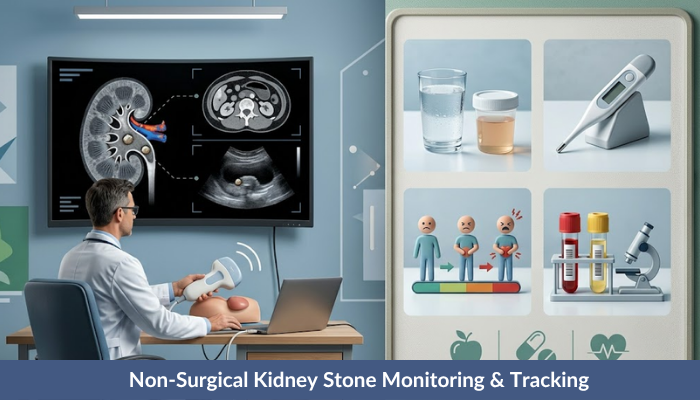
Monitoring Kidney Stones Without Surgery: Follow Up and Imaging
Follow up is what keeps waiting safe. Your urologist may advise:
- Repeat ultrasound or CT scan to see whether the stone has moved
- Symptom tracking, including pain, fever, and urine colour
- Blood and urine tests to check kidney health and infection
If the stone has not moved within the agreed period, treatment is usually planned instead of waiting longer.
Kidney Stone Blockage Symptoms: When Is Kidney Stone Treatment Needed?
Treatment becomes necessary when waiting could harm the kidney. Kidney stone blockage symptoms and other warning signs include:
- Large stone size
- Severe pain that medicines do not relieve
- Blocked urine flow or very little urine
- Kidney swelling seen on a scan
- Fever or chills, which suggest infection with obstruction
- Reduced kidney function
An infected, blocked kidney is an emergency. Timely treatment avoids complications and protects long term kidney health.
What Our Patients Are Saying
Kidney Stone Treatment Options When Stones Do Not Pass Naturally
Ureteroscopy for Kidney Stones and Laser Kidney Stone Removal
Ureteroscopy for kidney stones uses a thin scope passed through the natural urinary passage. Laser kidney stone removal breaks the stone into tiny pieces that are taken out or passed.
A temporary stent may be placed. Recovery after kidney stone removal by this route often involves mild burning and blood in the urine for a few days.
Shock Wave Lithotripsy for Kidney Stones
Shock wave lithotripsy for kidney stones uses sound waves from outside the body to break a stone into fragments. It suits selected stones based on size, position, and patient factors. Blood in the urine and colicky pain can occur as fragments pass.
Other Kidney Stone Surgery Options in India
Very large or complex stones may need percutaneous nephrolithotomy, a keyhole procedure through a small opening in the back. Kidney stone surgery in India is chosen only when other options are unsuitable, and every decision is personalised.
How Long Does It Take to Pass Kidney Stones Naturally?
Timing varies with stone size, location, symptoms, and medical advice. Many small stones pass within a few weeks, while larger or higher stones take longer or may not pass at all.
How to pass kidney stones naturally, safely comes down to steady hydration, prescribed medicines, and scheduled scans. Waiting is not recommended when fever, uncontrolled pain, or blockage appears.
Kidney Stone Recurrence Prevention: How Can New Stones Be Avoided?
Kidney stone recurrence prevention starts with fluids. The American Urological Association 2026 guideline on medical management encourages a daily urine volume of 2.5 litres for adults with a history of calcium stones. Other steps include:
- Reducing salt in food
- Keeping normal dietary calcium, as cutting it out can raise risk
- Eating animal protein in moderation
- Analysing a passed or removed stone when available
- Testing urine if stones keep returning
Follow Up After Kidney Stone Treatment and Kidney Function After Kidney Stones
Follow-up after kidney stone treatment confirms that no fragments remain and checks kidney function after kidney stones. Imaging may be repeated, and any stent is removed on time. People with recurring stones may need tests to find the cause, which helps prevent future stones.
How to Choose the Right Urologist for Kidney Stones
An experienced urologist explains when waiting is safe and when it is not. Look for a doctor who:
- Evaluates the stone accurately with imaging and tests
- Has experience across kidney stone treatment options
- Explains choices with and without surgery honestly
- Plans treatment around your health and expectations
- Supports long-term kidney health
Dr. Anup Ramani: Kidney Stone Specialist in Mumbai
Dr. Anup Ramani is a urologist who specialises in urinary tract conditions, including kidney and ureter stones. He evaluates each patient carefully to decide when a stone can be monitored and when intervention is needed. As a kidney stone specialist in India, he guides patients through kidney stone removal without surgery, medicines, ureteroscopy, and laser stone removal, using evidence-based methods.
Treatment is personalised to stone size and location, symptoms, kidney function, overall health, and treatment requirements. He explains the reasons behind each recommendation, with a focus on patient education, informed decision-making, long-term kidney health, and quality of life after treatment. Patients seeking kidney stone treatment in Mumbai can discuss all available options with a urologist for kidney stones.
Conclusion: Kidney Stone Treatment Decisions
Kidney stone removal without surgery is safe only when the stone is small, symptoms are controlled, and monitoring protects the kidney. When a stone is large, blocked, or infected, timely treatment is the safer choice. If you have stone pain or signs of blockage, see a urologist for evaluation.
Kidney Stone Treatment FAQs
Can kidney stones be removed without surgery?
Yes, in many cases. Small stones may pass with fluids, pain relief, and monitoring. Shock wave lithotripsy and ureteroscopy also avoid cuts on the skin. A urologist decides the safe route after scans.
Can kidney stones dissolve naturally?
Most do not. Uric acid stones may shrink with prescribed urine alkalinising medicine, but calcium stones usually need to pass or be removed.
What size kidney stone can pass naturally?
Stones of 5 mm or smaller pass most often, at about 68 percent in the 2007 AUA and EAU guideline analysis. Stones above 10 mm are unlikely to pass and usually need treatment.
How long does it take for a kidney stone to pass?
Many small stones pass within a few weeks. Larger or higher stones take longer or may not pass. If a stone has not moved by the follow-up date, treatment is discussed.
What medicines help kidney stone removal?
Pain relievers, alpha blockers such as tamsulosin, and urine alkalinising medicine for uric acid stones may be used. They support passage but do not break stones, and should be taken only as prescribed.
When does a kidney stone require treatment?
When the stone is large, pain is uncontrolled, urine flow is blocked, the kidney is swollen, fever or infection is present, or kidney function is reduced.
What happens if a kidney stone blocks the ureter?
Urine backs up and the kidney swells. This causes pain and can damage the kidney or lead to infection. Blockage with fever is an emergency and usually needs drainage before stone removal.
What are the treatment options if a kidney stone does not pass naturally?
Options include ureteroscopy with laser, shock wave lithotripsy, and percutaneous nephrolithotomy for very large stones. The choice depends on stone size, location, and patient health.

Uro-Oncological & Robotic Surgeon
Dr. Anup Ramani is a robotic uro-oncological surgeon and an internationally recognized expert in robotic surgery for prostate, kidney and urinary bladder cancers. With more than two decades of robotic experience and 2,000+ robotic procedures, he brings unmatched precision and outcomes to complex uro-oncology cases. He is widely published in his field and is known for a personal, transparent approach-often spending over an hour in initial consultations to educate patients on its disease, surgery and recovery. His expertise spans prostate cancer treatment, kidney and bladder cancer surgery, adrenal gland surgery, kidney stone treatment, penile cancer surgery and enlarged prostate management. Dr. Ramani advocates the advantages of robotic surgery-magnified 3D vision, tremor-filtered precision, minimal scarring, lower blood loss and faster recovery-helping patients return to life sooner.
Table of Contents

Recent Blogs
- Groin Lymph Node Surgery in Penis Cancer: When Is L ...
- Kidney Stone Removal Without Surgery: When Can Stones Pass Naturally and When Is Treatment Needed?
- Preparing for Bladder Cancer Surgery: Tests, Diet, ...
- Kidney Tumor Found Incidentally: What Happens After ...
- PSA Rising After Prostate Cancer Surgery: What Does ...
Best Uro-Oncological surgeon
Specialist in India for Robotic Surgery
MCh, DNB, MS, DNB
Dr. Anup Ramani
CONTACT
Uro-Oncologist in India,
Best Robotic Surgeon for Uro Oncology Surgery
1407, One Lodha Place Next to World Towers Senapati Bapat Marg, Worli, Mumbai. 400013.
Dr Anup Ramani @ Copyright 2026 – Website Maintenance, SEO & GEO by Opal Infotech
- Partial penectomy is done in cases where glans and distal penis is involved with carcinoma.
- Partial penectomy is a type of organ-preserving surgery. Preservation of sexual and micturational function depends on the surgical dissection and reconstruction of residual urethra.
- Patients who develop stones in the kidney or ureter, often experience severe pain.
- This condition usually needs a procedure to remove the kidney stones.
- This procedure is called ureteroscopy and is performed very commonly.
- It does not require any cuts and hence it is painless.
- The procedure is performed with an endoscope inserted through the penis under spinal anesthesia.
- The scope is inserted through the penis into the kidney and stones are dissolved with a laser.
- The procedure takes about 40-50 minutes.
- A catheter (urine pipe) is kept after the procedure to drain the bladder. A stent is kept in the kidney at the same time.
- Patient is mobile and walking in the room the same evening.
- Hospital stay is one night and patient is discharged the next day after removal of the catheter.
- Patient has to come back after six weeks to remove the stent in the kidney.
- Patients can resume office a week after surgery and heavy activities like running, weight lifting, a month after the procedure.
- We offer fixed packages for this procedure which can be obtained by calling our helpline +91 9967666060.
- Men with an enlarged prostate, which is a normal ageing changes, often experiencing difficulty passing urine. This condition usually needs a procedure to trim the prostate and relieve the blockage.
- This procedure is called TURP and is performed very commonly.
- It does not require any cuts and hence it is painless.
- The procedure is performed with an endoscope inserted through the penis under spinal anaesthesia.
- The overgrown prostate is dissolved with a laser bloodlessly.
- The procedure takes about 40 minutes.
- A catheter (urine pipe) is kept after the procedure to drain the bladder.
- Patient is mobile and walking in the room the same evening.
- Hospital stay is two nights and patient is discharged with the catheter, which is removed after 4 days.
- Patients can resume office a week after surgery and heavy activities like running, weight lifting, a month after the procedure.
- We offer fixed packages for this procedure which can be obtained by calling our helpline +91 9967666060.
-
Robotic adrenalectomy is a sophisticated, complex surgery and it is very important that an experienced surgeon performs this surgery to avoid major complications.
-
Once the anesthesia is done, and patient positioned, three micro cuts (3mm each) are made in the patient’s abdomen.
-
The arms of the Da Vinci robot are connected to the cuts via ports (tubes).
-
Dr. Ramani then sits in the controlling console to perform the surgery.
-
On an average, a robotic adrenalectomy takes one hour.
-
The surgery is almost completely bloodless and there has never been any need to transfuse blood after surgery.
-
A urine catheter and bag to drain the bladder is inserted during surgery.
-
A tiny drain pipe may be inserted in the surgical side of the abdomen, connected to a bag.
-
Patient is kept nil-by-mouth the day of the surgery, with IV fluids. Sips of water are started the next day and solid food by day three.
-
The drain pipe, if kept, is removed in the room on day 2 after surgery.
-
The catheter is removed on day two after surgery.
-
Total hospital stay for robotic adrenalectomy is 4 nights (including night before surgery).
-
Post discharge, a doctor from the surgical team visits the patient at home/ hotel room once every day.
On the day of discharge, patient is totally self-sufficient. They are able to walk freely without any pain, dress themselves, shower, toilet and they do not need to hire any nurse or help at home. Almost all patients are back to work within 2 weeks of surgery.
Heavy activities like running, weight lifting can be resumed after a month
Follow up after an adrenalectomy is in the form of CT scans, once a year for 5 years.
Local patients usually meet Dr. Ramani after two weeks to discuss report.Outstation patients are counselled on a phone consultation.
- Dr. Ramani is one of the very few surgeons in India who has the expertise to perform a robotic surgery for bladder cancer, which includes removing the urinary bladder and reconstructing a new bladder robotically.
- Robotic radical cystectomy is an extremely sophisticated, complex surgery and it is very important that an experienced surgeon performs this surgery to avoid major complications.
- Once the anaesthesia is done, and patient positioned, six micro cuts (3mm each) are made in the patient’s abdomen.
- The arms of the Da Vinci robot are connected to the cuts via ports (tubes).
- Dr. Ramani then sits in the controlling console to perform the surgery.
- On an average, a robotic radical cystectomy with an ileal conduit takes 3-4 hours.
- The surgery is almost completely bloodless and there has never been any need to transfuse blood after surgery.
- A urine catheter and bag to drain the new bladder is inserted during surgery.
- Two tiny drain pipe in inserted in the surgical side of the abdomen, connected to a bag.
- Patient is kept nil-by-mouth for 4 days after surgery with IV supplementation of patient’s daily requirements of calories, fats, carbohydrates, proteins and electrolytes.
- The drain pipes are removed in the room on day 3-5 after surgery.
- Total hospital stay for radical cystectomy is 8 nights (including night before surgery).
- Post discharge, a doctor from the surgical team visits the patient at home/ hotel room once every day.
- On the day of discharge, patient is totally self-sufficient. They are able to walk freely without any pain, dress themselves, shower, toilet and they do not need to hire any nurse or help at home.
- Almost all patients are back to work within 6 weeks of surgery. Heavy activities like running, weight lifting can be resumed after two months.
Follow up after a radical a cystectomy is in the form of CT scans, once a year for 5 years.
Histopathology report: Local patients usually meet Dr. Ramani after two weeks to discuss report.
Outstation patients are counselled on a phone consult. Depending on the report, patient may or may not need chemotherapy after surgery.
If chemo is needed, patients may choose to get it done with a medical oncologist of their choice or avail the services of one of the four medical oncologists on our team.
- Robotic partial nephrectomy is a sophisticated, complex surgery and it is very important that an experienced surgeon performs this surgery to avoid major complications. Robotic radical (total) nephrectomy is
- relatively easier but still requires significant experience to consistently deliver results.
- Once the anaesthesia is done, and patient positioned, five micro cuts (3mm each) are made in the patient’s abdomen.
- The arms of the Da Vinci robot are connected to the cuts via ports (tubes).
- Dr. Ramani then sits in the controlling console to perform the surgery.
- On an average, a robotic radical nephrectomy takes one hour and a robotic partial nephrectomy takes about an hour and half.
- The surgery is almost completely bloodless and there has never been any need to transfuse blood after surgery.
- A urine catheter and bag to drain the bladder is inserted during surgery.
- A tiny drain pipe in inserted in the surgical side of the abdomen, connected to a bag.
- Patient is kept nil-by-mouth the day of the surgery, with IV fluids. Sips of water are started the next day and solid food by day three.
- The drain pipe is removed in the room on day 3 after surgery. The catheter is removed on day two after surgery.
- Total hospital stay for radical/partial nephrectomy is 4 nights (including night before surgery).
- Post discharge, a doctor from the surgical team visits the patient at home/ hotel room once every day.
- On the day of discharge, patient is totally self- sufficient.
- They are able to walk freely without any pain, dress themselves, shower, toilet and they do not need to hire any nurse or help at home.
- Almost all patients are back to work within 2-3 weeks of surgery.
- Heavy activities like running, weight lifting can be resumed after a month.
- Follow up after a radical/partial Nephrectomy is in the form of CT scans, once a year for 5 years.
- Local patients usually meet Dr. Ramani after two weeks to discuss report.
- Outstation patients are counselled on a phone consultation.