By Dr. Anup Ramani
Share At:
Google AI ChatGPT Grok Perplexity

Listening Article

AI Summary

Preparing for bladder cancer surgery helps patients understand the procedure, feel ready and plan recovery with confidence. Preparation depends on the bladder cancer stage, the type of surgery, overall health, kidney function, nutritional status, medical tests and the planned urinary reconstruction approach. Patients can prepare better by completing the required investigations, staying physically active as advised, following dietary guidance, planning the hospital stay and discussing key questions with their surgeon.

Introduction: Bladder Cancer Surgery and Cystectomy Preparation

Preparing for Bladder Cancer Surgery begins well before the day of the operation. When patients understand each step, they usually feel more in control and face fewer surprises during recovery.

Bladder cancer surgery preparation usually includes tests, a review of the cancer stage, a discussion about urinary reconstruction and a plan for care in hospital and at home. This evaluation helps the surgeon plan treatment safely.

Every journey is different. A fit patient with early disease will prepare differently from someone with advanced disease or other health conditions.

 
We’re Ready to Help!
White Email Us
 

What Happens Before Bladder Cancer Surgery and Radical Cystectomy?

Your surgeon first reviews your biopsy report, scans and earlier treatment. Some patients with muscle-invasive disease also receive chemotherapy before surgery, and the team plans its timing.

Key factors considered before surgery include:

  • Bladder cancer stage and grade
  • Tumour location within the bladder
  • Overall health and fitness
  • Kidney function
  • Medical history and earlier treatments
  • Your goals and expectations for quality of life

These points guide the choice between bladder cancer treatment options, including radical cystectomy and robotic bladder cancer surgery.

Types of Bladder Cancer Surgery: TURBT, Partial Cystectomy and Radical Cystectomy

Not every patient needs bladder removal. The choice depends on how deep the cancer has grown and where the tumour sits. Your surgeon decides after reviewing the biopsy and scans.

Procedure Commonly used for What is done
TURBT (transurethral resection of bladder tumour) Diagnosis and non-muscle-invasive bladder cancer The tumour is removed through the urethra with a scope, with no cut on the abdomen.
Partial cystectomy Selected patients with a single tumour in a suitable location The part of the bladder wall with the tumour is removed and the bladder is kept.
Radical cystectomy Muscle invasive or high risk bladder cancer The whole bladder and nearby organs are removed, and a urinary diversion is created.

What Pre-Surgery Tests for Bladder Cancer Are Needed Before Cystectomy?

Pre-surgery tests for bladder cancer show how your body is likely to cope with surgery and anaesthesia. They also help the surgeon plan the operation and the type of urinary diversion.

  • Blood tests: check haemoglobin, blood counts, liver function and nutrition markers such as albumin.
  • Imaging scans: CT or MRI scans show the extent of the tumour and whether cancer has reached lymph nodes or other organs.
  • Kidney function tests: blood creatinine and, when needed, a kidney scan guide the choice of urinary diversion and medicine doses.
  • Heart and fitness evaluation: an ECG, echocardiogram and sometimes a stress test check heart fitness for surgery.
  • Anaesthesia assessment: an anaesthetist reviews your medicines, allergies, lungs and heart before the operation.

How Should Patients Prepare Physically for Cystectomy and Bladder Cancer Surgery?

Better fitness before surgery supports smoother recovery. Existing conditions such as diabetes or high blood pressure should be well controlled.

  • Breathing exercises: deep breathing, or an incentive spirometer if provided, keeps the lungs strong.
  • Physical activity: regular walking or light exercise, as your doctor advises.
  • Smoking and alcohol: quit smoking as early as possible, since it affects lung recovery and wound healing. Limit alcohol as advised.
  • Medication review: tell your team about every medicine and supplement. Never stop or change a medicine without instructions.

Diet Before Bladder Cancer Surgery: What Changes Are Recommended?

Diet before bladder cancer surgery should help you keep your weight and muscle strength. Good nutrition supports healing and lowers the risk of complications.

  • Protein: include eggs, dal, paneer, curd, fish, chicken or tofu, as suits your diet.
  • Balanced meals: add vegetables, fruits, whole grains and healthy fats.
  • Hydration: drink fluids regularly unless your doctor sets a limit.
  • Nutritional concerns: if you have lost weight or appetite, ask for a dietitian review.

Follow the hospital fasting instructions on the day before surgery.

Cystectomy Preparation: Understanding Surgery, Hospital Stay and Recovery Planning

Cystectomy means surgical removal of the bladder. In radical cystectomy, the bladder, nearby organs and pelvic lymph nodes are removed. In men this usually includes the prostate and seminal vesicles. In women it may include the uterus and ovaries, depending on the cancer. A urinary diversion is then created. Robotic radical cystectomy performs these steps through small incisions using robotic instruments.

Arrange leave from work and help at home, and share your worries with your team. If a stoma is likely, ask for a stoma nurse to meet you before surgery.

The hospital stay after cystectomy is often around one week, though it can be shorter or longer. Some patients spend a short time in intensive care first. Drains are usually removed within several days. A catheter or ureteric stents may stay for one to three weeks, depending on the type of urinary diversion. After discharge, you may need help with walking, medicines, wound care and stoma or catheter care.

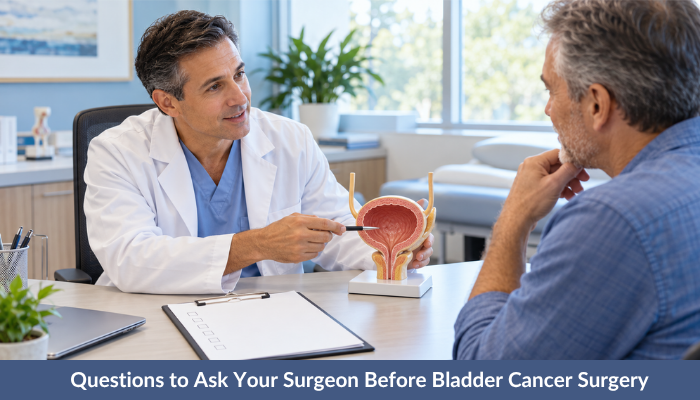
Questions Before Cystectomy: Bladder Surgery Checklist for Your Surgeon

Use this bladder surgery checklist for your consultation. These questions before cystectomy help you decide with confidence.

  • Which type of surgery do you recommend, open or robotic, and why?
  • Why is radical cystectomy suitable for my cancer stage?
  • Will I need chemotherapy before or after surgery?
  • What is my expected recovery timeline?
  • What complications are possible, and how are they managed?
  • Which urinary diversion options suit me?
  • How long will I stay in hospital and in intensive care?
  • What follow-up care and tests will I need?

Recovery After Bladder Cancer Surgery: What Happens Next?

Recovery after bladder cancer surgery happens in stages, and your team guides each one.

  • Immediate recovery: you are monitored closely for vital signs, fluids, urine output and drains.
  • Pain management: a combination of medicines keeps pain controlled so you can breathe deeply and walk.
  • Physical movement: walking usually starts within a day or two and helps prevent clots and chest problems.
  • Nutrition: you move from liquids to regular food as the bowel recovers.
  • Wound care: keep wounds clean and dry, and report redness, discharge or fever.
  • Daily activities: light activity returns over weeks. Avoid heavy lifting for the period advised. Full recovery may take a few months.
  • Follow-up appointments: early visits check wounds and review the pathology report.

What Our Patients Are Saying

" Dr. Ramani was very professional in his approach. He spent a lot of time to discuss the problem and compassionately handled a very complicated case. He is always accessible and ready to go the extra mile to put the patient at ease. Highly recommended! "
Manish Maheswari
On Google

Urinary Diversion After Bladder Removal: Ileal Conduit and Neobladder Reconstruction

Urinary diversion after bladder removal gives urine a new route out of the body. Ileal conduit after cystectomy: a short segment of intestine forms a channel. The ureters join this segment, and urine drains through a small opening on the abdomen called a stoma into an external collection bag. It is a well-established option. A stoma nurse teaches bag care, and most patients adapt over weeks to months. Neobladder reconstruction: a new bladder is created from intestine and joined to the urethra, so urine passes by the natural route. It suits selected patients with good kidney function, a healthy urethra, adequate fitness and willingness to learn. Urinary control takes time. Leakage at night is common early, and some patients need self-catheterisation. The choice is personalised and depends on the cancer condition, kidney function, overall health and patient preference.

How Families Can Support Recovery After Bladder Cancer Surgery

Emotional support makes a real difference. Families can help in practical ways:

  • Attend consultations and learn about the plan together
  • Help with daily activities, meals and medicines
  • Learn stoma or catheter care alongside the patient
  • Understand lifestyle adjustments and plan long term care

Follow Up After Bladder Cancer Surgery: Why It Matters

Follow up after bladder cancer surgery is essential. Regular visits allow cancer surveillance with scans and blood tests, monitoring of kidney function, and management of the urinary diversion. Long-term monitoring may also include checking vitamin B12 levels, since the intestine is used in reconstruction.

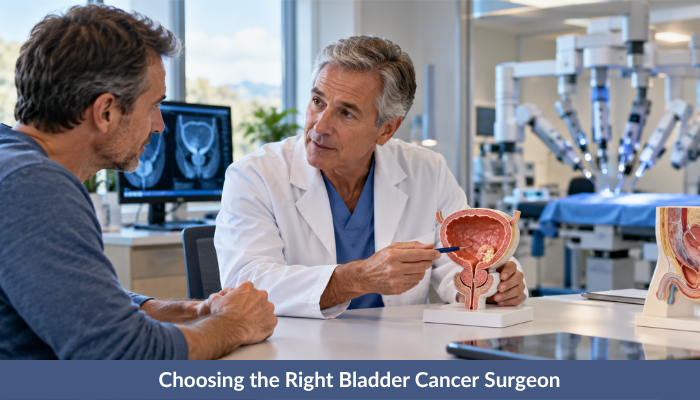
How to Choose a Bladder Cancer Surgeon and Robotic Uro Oncologist?

Patients should look for a specialist with experience in bladder cancer surgery, urinary reconstruction, and long-term follow-up care. Useful points to check include:

  • Careful planning for complex surgery
  • A personalised approach based on cancer stage and health
  • Clear explanation of open and robotic options

A robotic uro oncologist can offer minimally invasive surgery when it suits the patient, alongside the same careful cancer control expected from open surgery.

Dr. Anup Ramani: Bladder Cancer Specialist in Mumbai

Dr. Anup Ramani is a uro oncologist and bladder cancer surgeon in Mumbai who focuses on diagnosis, surgical planning and patient care. As a robotic uro oncologist, he performs robotic bladder cancer surgery and explains bladder cancer treatment options, including radical cystectomy, robotic radical cystectomy and urinary diversion, in clear language. His plans are personalised to cancer stage, kidney function and general health, with an evidence-based focus on informed decisions, long-term outcomes and quality of life.

 
Want to Discuss?
White Call Us Now!
 

Conclusion: Recovery Planning After Bladder Cancer Surgery

Preparing for bladder cancer surgery is easier when you complete your tests, stay active, eat well, ask questions and involve your family. Whether you are seeking a bladder cancer specialist in India or planning bladder cancer surgery in India, choose a team that plans your care, explains your options and stays with you through follow-up.

Frequently Asked Questions About Bladder Cancer Surgery

Complete all pre-surgery tests, stay active, stop smoking, review medicines with your doctor and eat protein-rich meals. Plan your hospital stay and home support, and discuss urinary diversion with your surgeon before bladder cancer surgery.

Common tests before bladder cancer surgery include blood tests, CT or MRI scans, kidney function tests, an ECG and echocardiogram, and an anaesthesia assessment.

A balanced diet with enough protein, vegetables, fruits and fluids helps maintain strength. If cancer or treatment has reduced your appetite or weight, a dietitian can advise.

Ask about the type of surgery, why it suits your cancer stage, possible complications, urinary diversion options, hospital stay, recovery timeline and follow-up care.

Hospital stay is often around one week, and most patients return to light daily activity within several weeks. Full recovery from bladder cancer surgery may take a few months.

You are monitored in hospital, start walking early, and gradually resume eating. The final pathology report is reviewed, and your surgeon plans follow-up and any further cancer treatment.

The two main options are an ileal conduit, where urine drains into an external bag through a stoma, and a neobladder, where a new bladder made from intestine is joined to the urethra. The choice is personalised to your cancer and health.

Walk early, do breathing exercises, eat enough protein, keep wounds clean and attend every follow-up visit. Report fever, wound discharge or urinary problems to your cancer care team.

PARTIAL PENECTOMY
  • Partial penectomy is done in cases where glans and distal penis is involved with carcinoma. 
  • Partial penectomy is a type of organ-preserving surgery. Preservation of sexual and micturational function depends on the surgical dissection and reconstruction of residual urethra.
Kidney Stone Removal
  • Patients who develop stones in the kidney or ureter, often experience severe pain.
  • This condition usually needs a procedure to remove the kidney stones.
  • This procedure is called ureteroscopy and is performed very commonly.
  • It does not require any cuts and hence it is painless.
  • The procedure is performed with an endoscope inserted through the penis under spinal anesthesia.
  • The scope is inserted through the penis into the kidney and stones are dissolved with a laser.
  • The procedure takes about 40-50 minutes. 
  • A catheter (urine pipe) is kept after the procedure to drain the bladder. A stent is kept in the kidney at the same time.
  • Patient is mobile and walking in the room the same evening.
  • Hospital stay is one night and patient is discharged the next day after removal of the catheter.
  • Patient has to come back after six weeks to remove the stent in the kidney.
  • Patients can resume office a week after surgery and heavy activities like running, weight lifting, a month after the procedure.
  • We offer fixed packages for this procedure which can be obtained by calling our helpline +91 9967666060.
  • Men with an enlarged prostate, which is a normal ageing changes, often experiencing difficulty passing urine. This condition usually needs a procedure to trim the prostate and relieve the blockage.
  • This procedure is called TURP and is performed very commonly.
  • It does not require any cuts and hence it is painless.
  • The procedure is performed with an endoscope inserted through the penis under spinal anaesthesia.
  • The overgrown prostate is dissolved with a laser bloodlessly.
  • The procedure takes about 40 minutes.
  • A catheter (urine pipe) is kept after the procedure to drain the bladder.
  • Patient is mobile and walking in the room the same evening.
  • Hospital stay is two nights and patient is discharged with the catheter, which is removed after 4 days.
  • Patients can resume office a week after surgery and heavy activities like running, weight lifting, a month after the procedure.
  • We offer fixed packages for this procedure which can be obtained by calling our helpline +91 9967666060.
ROBOTIC ADRENALECTOMY FOR ADRENAL GLAND TUMOUR
  • Robotic adrenalectomy is a sophisticated, complex surgery and it is very important that an experienced surgeon performs this surgery to avoid major complications.

  • Once the anesthesia is done, and patient positioned, three micro cuts (3mm each) are made in the patient’s abdomen.

  • The arms of the Da Vinci robot are connected to the cuts via ports (tubes).

  • Dr. Ramani then sits in the controlling console to perform the surgery.

  • On an average, a robotic adrenalectomy takes one hour.

  • The surgery is almost completely bloodless and there has never been any need to transfuse blood after surgery.

  • A urine catheter and bag to drain the bladder is inserted during surgery.

  • A tiny drain pipe may be inserted in the surgical side of the abdomen, connected to a bag.

  • Patient is kept nil-by-mouth the day of the surgery, with IV fluids. Sips of water are started the next day and solid food by day three.

  • The drain pipe, if kept, is removed in the room on day 2 after surgery.

  • The catheter is removed on day two after surgery.

  • Total hospital stay for robotic adrenalectomy is 4 nights (including night before surgery).

  • Post discharge, a doctor from the surgical team visits the patient at home/ hotel room once every day.

RETURN TO ACTIVITY
  • On the day of discharge, patient is totally self-sufficient. They are able to walk freely without any pain, dress themselves, shower, toilet and they do not need to hire any nurse or help at home. Almost all patients are back to work within 2 weeks of surgery.

  • Heavy activities like running, weight lifting can be resumed after a month

FOLLOW UP AFTER SURGERY
  • Follow up after an adrenalectomy is in the form of CT scans, once a year for 5 years.
    Local patients usually meet Dr. Ramani after two weeks to discuss report.

  • Outstation patients are counselled on a phone consultation.

ROBOTIC SURGERY FOR BLADDER CANCER
  • Dr. Ramani is one of the very few surgeons in India who has the expertise to perform a robotic surgery for bladder cancer, which includes removing the urinary bladder and reconstructing a new bladder robotically.
  • Robotic radical cystectomy is an extremely sophisticated, complex surgery and it is very important that an experienced surgeon performs this surgery to avoid major complications.
  • Once the anaesthesia is done, and patient positioned, six micro cuts (3mm each) are made in the patient’s abdomen.
  • The arms of the Da Vinci robot are connected to the cuts via ports (tubes).
  • Dr. Ramani then sits in the controlling console to perform the surgery.
  • On an average, a robotic radical cystectomy with an ileal conduit takes 3-4 hours.
  • The surgery is almost completely bloodless and there has never been any need to transfuse blood after surgery.
  • A urine catheter and bag to drain the new bladder is inserted during surgery.
  • Two tiny drain pipe in inserted in the surgical side of the abdomen, connected to a bag.
  • Patient is kept nil-by-mouth for 4 days after surgery with IV supplementation of patient’s daily requirements of calories, fats, carbohydrates, proteins and electrolytes.
  • The drain pipes are removed in the room on day 3-5 after surgery.
  • Total hospital stay for radical cystectomy is 8 nights (including night before surgery).
  • Post discharge, a doctor from the surgical team visits the patient at home/ hotel room once every day.
RETURN TO ACTIVITY
  • On the day of discharge, patient is totally self-sufficient. They are able to walk freely without any pain, dress themselves, shower, toilet and they do not need to hire any nurse or help at home.
  • Almost all patients are back to work within 6 weeks of surgery. Heavy activities like running, weight lifting can be resumed after two months.
FOLLOW UP AFTER SURGERY
  • Follow up after a radical a cystectomy is in the form of CT scans, once a year for 5 years.

  • Histopathology report: Local patients usually meet Dr. Ramani after two weeks to discuss report.

  • Outstation patients are counselled on a phone consult. Depending on the report, patient may or may not need chemotherapy after surgery.

  • If chemo is needed, patients may choose to get it done with a medical oncologist of their choice or avail the services of one of the four medical oncologists on our team.

ROBOTIC RADICAL/PARTIAL NEPHRECTOMY FOR KIDNEY CANCER
  • Robotic partial nephrectomy is a sophisticated, complex surgery and it is very important that an experienced surgeon performs this surgery to avoid major complications. Robotic radical (total) nephrectomy is
  • relatively easier but still requires significant experience to consistently deliver results.
  • Once the anaesthesia is done, and patient positioned, five micro cuts (3mm each) are made in the patient’s abdomen.
  • The arms of the Da Vinci robot are connected to the cuts via ports (tubes).
  • Dr. Ramani then sits in the controlling console to perform the surgery.
  • On an average, a robotic radical nephrectomy takes one hour and a robotic partial nephrectomy takes about an hour and half.
  • The surgery is almost completely bloodless and there has never been any need to transfuse blood after surgery.
  • A urine catheter and bag to drain the bladder is inserted during surgery.
  • A tiny drain pipe in inserted in the surgical side of the abdomen, connected to a bag.
  • Patient is kept nil-by-mouth the day of the surgery, with IV fluids. Sips of water are started the next day and solid food by day three.
  • The drain pipe is removed in the room on day 3 after surgery. The catheter is removed on day two after surgery.
  • Total hospital stay for radical/partial nephrectomy is 4 nights (including night before surgery).
  • Post discharge, a doctor from the surgical team visits the patient at home/ hotel room once every day.
RETURN TO ACTIVITY
  • On the day of discharge, patient is totally self- sufficient. 
  • They are able to walk freely without any pain, dress themselves, shower, toilet and they do not need to hire any nurse or help at home. 
  • Almost all patients are back to work within 2-3 weeks of surgery.
  • Heavy activities like running, weight lifting can be resumed after a month.
FOLLOW UP AFTER SURGERY
  • Follow up after a radical/partial Nephrectomy is in the form of CT scans, once a year for 5 years.
  • Local patients usually meet Dr. Ramani after two weeks to discuss report. 
  • Outstation patients are counselled on a phone consultation.