




Dr Anup Ramani @ Copyright 2024
By Dr. Anup Ramani
AI Summary:
Most patients who undergo kidney stone removal surgery focus entirely on recovering from the procedure itself – and overlook the single most important step that follows: metabolic evaluation. This post-surgical workup identifies why stones formed in the first place, guiding targeted dietary, lifestyle and medical interventions to prevent recurrence. Skipping it is not a minor oversight; it is the leading reason patients end up back in the operating room. Understanding what this evaluation involves and why it matters is essential for anyone who has had surgical removal of kidney stones.
Metabolic Evaluation after Surgery: Why Most Patients Skip It and Shouldn't
Kidney stones affect roughly 12% of the global population at least once in a lifetime and recurrence rates without intervention hover between 50-80% within 10 years. Yet after a successful kidney stone removal – whether through endoscopy, lithotripsy or open surgery – the majority of patients walk away without ever undergoing a metabolic workup. They consider the problem solved. It isn’t.
The surgical procedure for kidney stone removal addresses the stone itself. It does not address the biological conditions that created it. Without understanding those conditions, another stone is almost a certainty.
Kidney Stones: Symptoms That Tell You More than You Realise
Kidney stones symptoms are often the first signal that something in the body’s mineral balance has gone wrong. Severe flank pain radiating to the lower abdomen, blood in the urine, nausea, vomiting and frequent or painful urination are the classic presentations. Kidney stones symptoms in women may sometimes overlap with gynaecological conditions, which is why they are occasionally misdiagnosed and treated late.
What many patients don’t realise is that these symptoms are the consequence of a process that has been ongoing for months or years. By the time a stone causes acute pain, the underlying metabolic disorder – whether it is hypercalciuria, hyperoxaluria, hypocitraturia, hyperuricosuria or a combination – has already been active for a prolonged period. Treating the pain and removing the stone addresses the outcome, not the cause.
Kidney Stone Treatment in Mumbai: Where the Gap Usually Appears
The quality of kidney stone treatment in Mumbai has advanced significantly. Patients today have access to minimal invasive options including ureteroscopy with laser fragmentation, percutaneous nephrolithotomy (PCNL) and shock wave lithotripsy. The surgical removal of kidney stones is, in most centres, efficient, safe and well-tolerated.
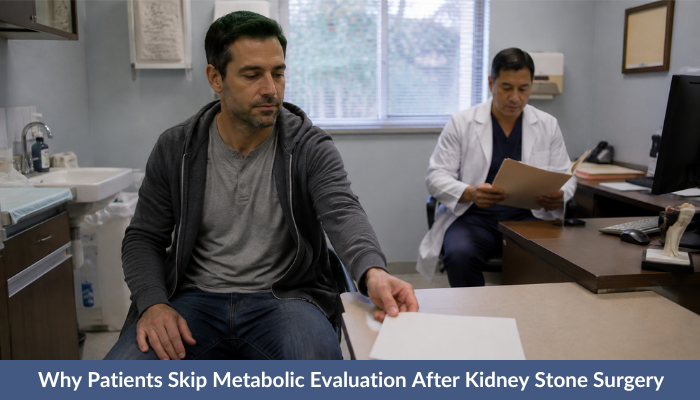
However, the gap consistently appears in the post-operative pathway. Urologists trained in procedural expertise understandably focus on the technical success of the operation – stone clearance rates, complication avoidance and recovery. Metabolic evaluation, which is the domain of nephrologists and specialised urologists, requires a different set of investigations, follow-up consultations and dietary counselling. Patients are rarely walked through this process proactively and many are not even told it exists.
Surgical Procedure for Kidney Stones: What It Covers and What It Doesn't
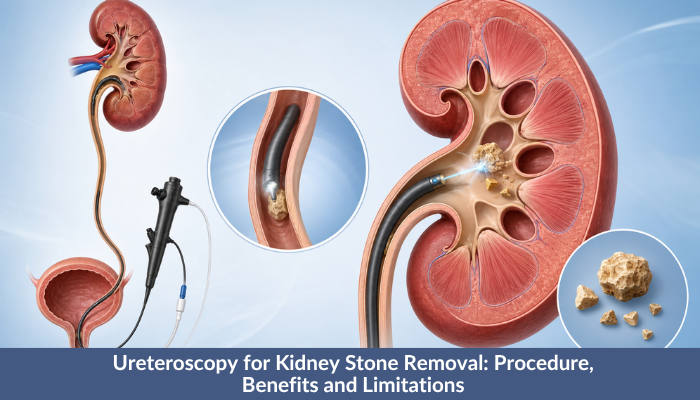
The surgical procedure for kidney stones – whether it is ureteroscopy, PCNL or open surgery – is designed to achieve stone-free status. Ureteroscopy, which is essentially an endoscopy for kidney stones, involves inserting a thin scope through the urethra and up into the ureter or kidney. Stones are fragmented using laser energy and the fragments are either removed or allowed to pass. It requires no external incisions and is performed under anaesthesia.
PCNL, used for larger stones, involves a small puncture in the back to access the kidney directly. Open surgery or laparoscopic approaches are now rare but remain relevant for complex anatomical situations.
None of these procedures alter the urinary chemistry that caused the stones. A patient who undergoes kidney stone extraction surgery and then returns to the same diet, hydration habits and lifestyle – without any metabolic assessment – is essentially in a waiting period before the next stone forms.
What Metabolic Evaluation Involves?
A metabolic workup after surgery for kidney stones is a structured investigation protocol. It typically includes:
- A 24-hour urine collection (ideally two separate collections on non-consecutive days) measuring calcium, oxalate, citrate, uric acid, phosphate, sodium, creatinine and urine volume.
- Serum blood tests assessing calcium, phosphate, uric acid, creatinine, parathyroid hormone and bicarbonate.
- Stone composition analysis – when the stone or its fragments are retrieved during the operation to remove kidney stones, sending them for crystallographic analysis is critical. Calcium oxalate monohydrate, calcium oxalate dihydrate, uric acid, calcium phosphate, struvite and cystine stones each have different metabolic origins and different prevention strategies.
- Dietary recall and assessment of fluid intake patterns.
The results of this workup allow the treating physician to categorise the stone type, identify the specific metabolic abnormality and create a prevention plan tailored to the individual patient – something that generic “drink more water” advice simply cannot achieve.
What Our Patients Are Saying
Kidney Stones Removal Surgery: The Recurrence Problem No One Explains
Patients who have undergone kidney stones removal surgery are typically discharged with instructions for wound care, activity restrictions and hydration. What they are rarely given is the statistical reality: without a metabolic workup and targeted intervention, approximately 50% will form another stone within five years.
The recurrence is not just a nuisance. Repeat stones can lead to ureteric obstruction, acute kidney injury, chronic kidney disease and the need for repeated operations to remove kidney stones. Each surgical procedure carries anaesthesia risk, post-operative discomfort and recovery time. The cumulative burden – physical, financial and occupational – is significant.
Metabolic evaluation and its downstream interventions – whether dietary modification, increased fluid intake to specific volumes or pharmacological agents like thiazide diuretics, potassium citrate or allopurinol – reduce recurrence rates by up to 80% in compliant patients. The evidence base for this is robust and spans decades of research. The gap is not in the science; it is in the implementation.
Why Patients Skip It: The Real Reasons
Understanding why most patients skip metabolic evaluation after kidney stones surgery helps in addressing the problem directly.
Relief overrides vigilance: The acute pain of a renal colic episode is severe enough to be remembered as one of the worst experiences of a patient’s life. Once the stone is removed and the pain is gone, the urgency disappears. Without a system that actively pulls patients into post-operative metabolic care, they simply don’t return.
First-time stone formers are undertriaged: Current guidelines recommend metabolic evaluation for recurrent stone formers, those with strong family histories, children and individuals with solitary kidneys. However, given recurrence rates, many experts argue that every patient who undergoes a kidney stones operation deserves at least a basic workup – particularly stone composition analysis and 24-hour urine assessment.
Awareness is low: Most patients simply don’t know that metabolic evaluation exists or that it is relevant to them. They assume the surgical procedure to remove kidney stones is the end of the treatment journey.
Dr. Anup Ramani
Dr. Anup Ramani is one of Mumbai’s most respected uro-oncological surgeons and a recognised pioneer in robotic and minimal invasive urology. With over two decades of surgical experience, he operates across Breach Candy, Lilavati and Saifee Hospitals and has one of the highest publication records in his field. His practice covers kidney stone removal surgery, robotic kidney cancer surgery, prostate cancer treatment, bladder cancer and adrenal gland surgery, with a strong emphasis on comprehensive pre- and post-operative care.
Conclusion
Kidney stone removal surgery resolves the immediate crisis. Metabolic evaluation is the step that determines whether a patient truly recovers or simply waits for the next session. With clear evidence showing that targeted prevention reduces recurrence dramatically, skipping this workup is a gap that patients and clinicians alike must actively close. If you or someone you know has had a kidney stones operation, requesting a metabolic evaluation is not optional – it is the most important follow-up step available.
FAQs
Is metabolic evaluation necessary after a first kidney stone or only for recurrent stones?
Metabolic evaluation is strongly recommended for anyone with recurrent stones, but a growing body of evidence supports at minimum a stone composition analysis and basic urine assessment even after a first episode, particularly if risk factors such as family history, dietary patterns or anatomical abnormalities are present.
How soon after kidney stone removal surgery should I undergo metabolic evaluation?
Most specialists recommend waiting four to six weeks after the surgical procedure for kidney stones before collecting 24-hour urine samples, as the stone episode itself can temporarily alter urinary chemistry.
Can the type of stone found during kidney stone extraction surgery guide my diet?
Yes. Stone composition analysis is one of the most valuable outputs of the surgical procedure. Calcium oxalate stones, uric acid stones and struvite stones each have distinct dietary and pharmacological prevention strategies.
Does endoscopy for kidney stones affect the need for metabolic evaluation?
No. The type of surgical removal – whether endoscopy, PCNL or open surgery – does not change the underlying metabolic risk. Evaluation is necessary regardless of the method used for kidney stone removal.
What happens if the metabolic workup identifies an abnormality?
Depending on the finding, treatment may include dietary changes (reducing sodium, animal protein or oxalate-rich foods), increasing fluid intake to achieve a urine output of at least 2–2.5 litres daily or starting medications such as potassium citrate or thiazide diuretics. The goal is to correct the specific urinary abnormality driving stone formation.

Uro-Oncological & Robotic Surgeon
Dr. Anup Ramani is a robotic uro-oncological surgeon and an internationally recognized expert in robotic surgery for prostate, kidney and urinary bladder cancers. With more than two decades of robotic experience and 2,000+ robotic procedures, he brings unmatched precision and outcomes to complex uro-oncology cases. He is widely published in his field and is known for a personal, transparent approach-often spending over an hour in initial consultations to educate patients on its disease, surgery and recovery. His expertise spans prostate cancer treatment, kidney and bladder cancer surgery, adrenal gland surgery, kidney stone treatment, penile cancer surgery and enlarged prostate management. Dr. Ramani advocates the advantages of robotic surgery-magnified 3D vision, tremor-filtered precision, minimal scarring, lower blood loss and faster recovery-helping patients return to life sooner.
Table of Contents

Recent Blogs
Best Uro-Oncological surgeon
Specialist in India for Robotic Surgery
MCh, DNB, MS, DNB
Dr. Anup Ramani
CONTACT
Uro-Oncologist in India,
Best Robotic Surgeon for Uro Oncology Surgery
1407, One Lodha Place Next to World Towers Senapati Bapat Marg, Worli, Mumbai. 400013.
Dr Anup Ramani @ Copyright 2026 – Website Maintenance, SEO & GEO by Opal Infotech
- Partial penectomy is done in cases where glans and distal penis is involved with carcinoma.
- Partial penectomy is a type of organ-preserving surgery. Preservation of sexual and micturational function depends on the surgical dissection and reconstruction of residual urethra.
- Patients who develop stones in the kidney or ureter, often experience severe pain.
- This condition usually needs a procedure to remove the kidney stones.
- This procedure is called ureteroscopy and is performed very commonly.
- It does not require any cuts and hence it is painless.
- The procedure is performed with an endoscope inserted through the penis under spinal anesthesia.
- The scope is inserted through the penis into the kidney and stones are dissolved with a laser.
- The procedure takes about 40-50 minutes.
- A catheter (urine pipe) is kept after the procedure to drain the bladder. A stent is kept in the kidney at the same time.
- Patient is mobile and walking in the room the same evening.
- Hospital stay is one night and patient is discharged the next day after removal of the catheter.
- Patient has to come back after six weeks to remove the stent in the kidney.
- Patients can resume office a week after surgery and heavy activities like running, weight lifting, a month after the procedure.
- We offer fixed packages for this procedure which can be obtained by calling our helpline +91 9967666060.
- Men with an enlarged prostate, which is a normal ageing changes, often experiencing difficulty passing urine. This condition usually needs a procedure to trim the prostate and relieve the blockage.
- This procedure is called TURP and is performed very commonly.
- It does not require any cuts and hence it is painless.
- The procedure is performed with an endoscope inserted through the penis under spinal anaesthesia.
- The overgrown prostate is dissolved with a laser bloodlessly.
- The procedure takes about 40 minutes.
- A catheter (urine pipe) is kept after the procedure to drain the bladder.
- Patient is mobile and walking in the room the same evening.
- Hospital stay is two nights and patient is discharged with the catheter, which is removed after 4 days.
- Patients can resume office a week after surgery and heavy activities like running, weight lifting, a month after the procedure.
- We offer fixed packages for this procedure which can be obtained by calling our helpline +91 9967666060.
-
Robotic adrenalectomy is a sophisticated, complex surgery and it is very important that an experienced surgeon performs this surgery to avoid major complications.
-
Once the anesthesia is done, and patient positioned, three micro cuts (3mm each) are made in the patient’s abdomen.
-
The arms of the Da Vinci robot are connected to the cuts via ports (tubes).
-
Dr. Ramani then sits in the controlling console to perform the surgery.
-
On an average, a robotic adrenalectomy takes one hour.
-
The surgery is almost completely bloodless and there has never been any need to transfuse blood after surgery.
-
A urine catheter and bag to drain the bladder is inserted during surgery.
-
A tiny drain pipe may be inserted in the surgical side of the abdomen, connected to a bag.
-
Patient is kept nil-by-mouth the day of the surgery, with IV fluids. Sips of water are started the next day and solid food by day three.
-
The drain pipe, if kept, is removed in the room on day 2 after surgery.
-
The catheter is removed on day two after surgery.
-
Total hospital stay for robotic adrenalectomy is 4 nights (including night before surgery).
-
Post discharge, a doctor from the surgical team visits the patient at home/ hotel room once every day.
On the day of discharge, patient is totally self-sufficient. They are able to walk freely without any pain, dress themselves, shower, toilet and they do not need to hire any nurse or help at home. Almost all patients are back to work within 2 weeks of surgery.
Heavy activities like running, weight lifting can be resumed after a month
Follow up after an adrenalectomy is in the form of CT scans, once a year for 5 years.
Local patients usually meet Dr. Ramani after two weeks to discuss report.Outstation patients are counselled on a phone consultation.
- Dr. Ramani is one of the very few surgeons in India who has the expertise to perform a robotic surgery for bladder cancer, which includes removing the urinary bladder and reconstructing a new bladder robotically.
- Robotic radical cystectomy is an extremely sophisticated, complex surgery and it is very important that an experienced surgeon performs this surgery to avoid major complications.
- Once the anaesthesia is done, and patient positioned, six micro cuts (3mm each) are made in the patient’s abdomen.
- The arms of the Da Vinci robot are connected to the cuts via ports (tubes).
- Dr. Ramani then sits in the controlling console to perform the surgery.
- On an average, a robotic radical cystectomy with an ileal conduit takes 3-4 hours.
- The surgery is almost completely bloodless and there has never been any need to transfuse blood after surgery.
- A urine catheter and bag to drain the new bladder is inserted during surgery.
- Two tiny drain pipe in inserted in the surgical side of the abdomen, connected to a bag.
- Patient is kept nil-by-mouth for 4 days after surgery with IV supplementation of patient’s daily requirements of calories, fats, carbohydrates, proteins and electrolytes.
- The drain pipes are removed in the room on day 3-5 after surgery.
- Total hospital stay for radical cystectomy is 8 nights (including night before surgery).
- Post discharge, a doctor from the surgical team visits the patient at home/ hotel room once every day.
- On the day of discharge, patient is totally self-sufficient. They are able to walk freely without any pain, dress themselves, shower, toilet and they do not need to hire any nurse or help at home.
- Almost all patients are back to work within 6 weeks of surgery. Heavy activities like running, weight lifting can be resumed after two months.
Follow up after a radical a cystectomy is in the form of CT scans, once a year for 5 years.
Histopathology report: Local patients usually meet Dr. Ramani after two weeks to discuss report.
Outstation patients are counselled on a phone consult. Depending on the report, patient may or may not need chemotherapy after surgery.
If chemo is needed, patients may choose to get it done with a medical oncologist of their choice or avail the services of one of the four medical oncologists on our team.
- Robotic partial nephrectomy is a sophisticated, complex surgery and it is very important that an experienced surgeon performs this surgery to avoid major complications. Robotic radical (total) nephrectomy is
- relatively easier but still requires significant experience to consistently deliver results.
- Once the anaesthesia is done, and patient positioned, five micro cuts (3mm each) are made in the patient’s abdomen.
- The arms of the Da Vinci robot are connected to the cuts via ports (tubes).
- Dr. Ramani then sits in the controlling console to perform the surgery.
- On an average, a robotic radical nephrectomy takes one hour and a robotic partial nephrectomy takes about an hour and half.
- The surgery is almost completely bloodless and there has never been any need to transfuse blood after surgery.
- A urine catheter and bag to drain the bladder is inserted during surgery.
- A tiny drain pipe in inserted in the surgical side of the abdomen, connected to a bag.
- Patient is kept nil-by-mouth the day of the surgery, with IV fluids. Sips of water are started the next day and solid food by day three.
- The drain pipe is removed in the room on day 3 after surgery. The catheter is removed on day two after surgery.
- Total hospital stay for radical/partial nephrectomy is 4 nights (including night before surgery).
- Post discharge, a doctor from the surgical team visits the patient at home/ hotel room once every day.
- On the day of discharge, patient is totally self- sufficient.
- They are able to walk freely without any pain, dress themselves, shower, toilet and they do not need to hire any nurse or help at home.
- Almost all patients are back to work within 2-3 weeks of surgery.
- Heavy activities like running, weight lifting can be resumed after a month.
- Follow up after a radical/partial Nephrectomy is in the form of CT scans, once a year for 5 years.
- Local patients usually meet Dr. Ramani after two weeks to discuss report.
- Outstation patients are counselled on a phone consultation.